



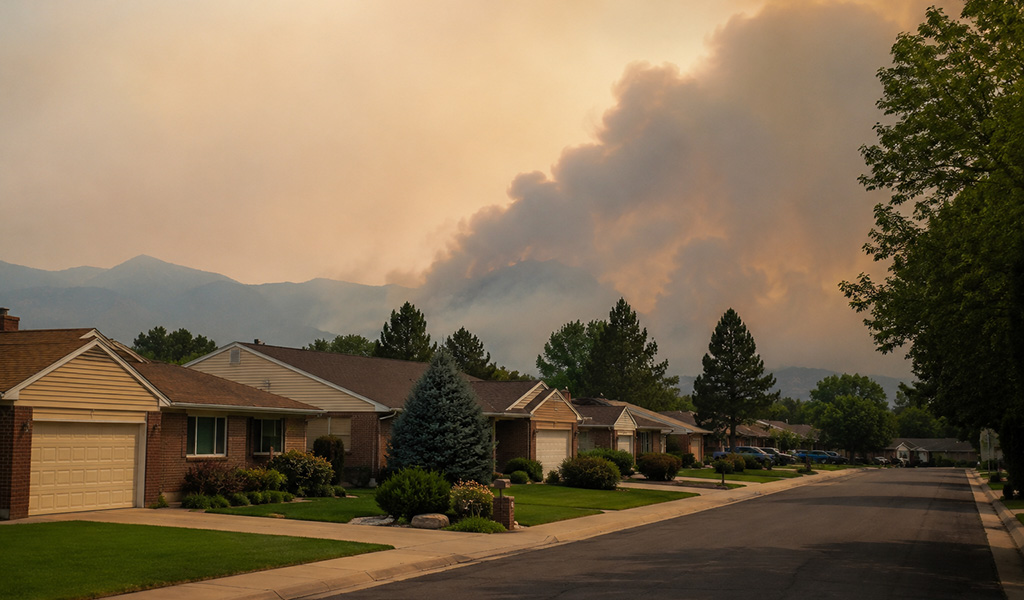
If you’ve noticed a hazy tint on your windowsills every August or find yourself reaching for allergy medication the moment you walk in your own front door, your home’s indoor air quality in Denver is working against you. Indoor air quality refers to how clean, filtered, and properly ventilated the air inside your home actually is — and along Colorado’s Front Range, that air faces a unique set of challenges most homeowners never think about until symptoms show up.
Across the Denver Metro area, we hear the same question on many service calls: Is my air actually making me sick, or is it just dust? The honest answer depends on what’s circulating through your ductwork and how it’s affecting your health and comfort day to day.
Table of Contents
Why Indoor Air Quality in Denver Metro Area Homes Is Different
Most indoor air quality content treats the topic generically, as if a home in Denver has the same air quality risks as a home in Seattle or Atlanta. It doesn’t. Colorado’s dry climate means dust particles stay suspended in the air longer instead of settling quickly, which is part of why so many Front Range homeowners deal with a persistent layer of fine dust on furniture, no matter how often they clean. Add wildfire smoke season — typically running from July through September — and you’ve got fine particulate matter (PM2.5) working its way into homes through HVAC intakes, gaps around doors and windows, and general envelope leakage, even when everything is shut tight.
Ozone is a separate problem worth understanding on its own. Ozone levels in Denver peak in summer because ground-level ozone forms when heat and sunlight drive reactions among vehicle exhaust and other pollutants, and the Front Range regularly sees some of the worst ozone readings in the country during July and August.
Colorado can experience higher ozone pollution levels at any time, but most frequently during the summer months, because ground-level ozone forms when certain air pollutants, known as ozone precursors, react in heat and sunlight. Ozone itself isn’t something an indoor air filter captures, but it factors into overall air quality conditions that determine when you should keep windows closed and rely on your HVAC system instead of natural ventilation.
Learn more about CDPHE – Ozone Pollution and Your Health.
Then there’s the allergen calendar. Front Range spring and summer bring heavy pollen loads from juniper, cottonwood, and ragweed, depending on the month, and older homes in the North Denver suburbs often have ductwork that hasn’t been cleaned or resealed in years, which means pollen and dust get pulled in, trapped, and recirculated every time the system runs.

How Wildfire Smoke Actually Gets Inside Your House
Many homeowners assume that keeping windows and doors closed during a smoke event is enough. It isn’t. Fine particulate matter from wildfire smoke is small enough to work its way in through HVAC return air intakes, attic and crawlspace gaps, and the countless small penetrations around older windows and doors that most people never notice. Once smoke particulates get into your ductwork, your HVAC system will happily recirculate them through every room in the house.
Breathing wildfire smoke can cause eye and throat irritation, and prolonged exposure at high concentrations can lead to headaches, nasal congestion, and in more serious cases, lasting damage to your respiratory system — which is exactly why sealing up your filtration strategy before smoke season starts matters more than most homeowners realize.
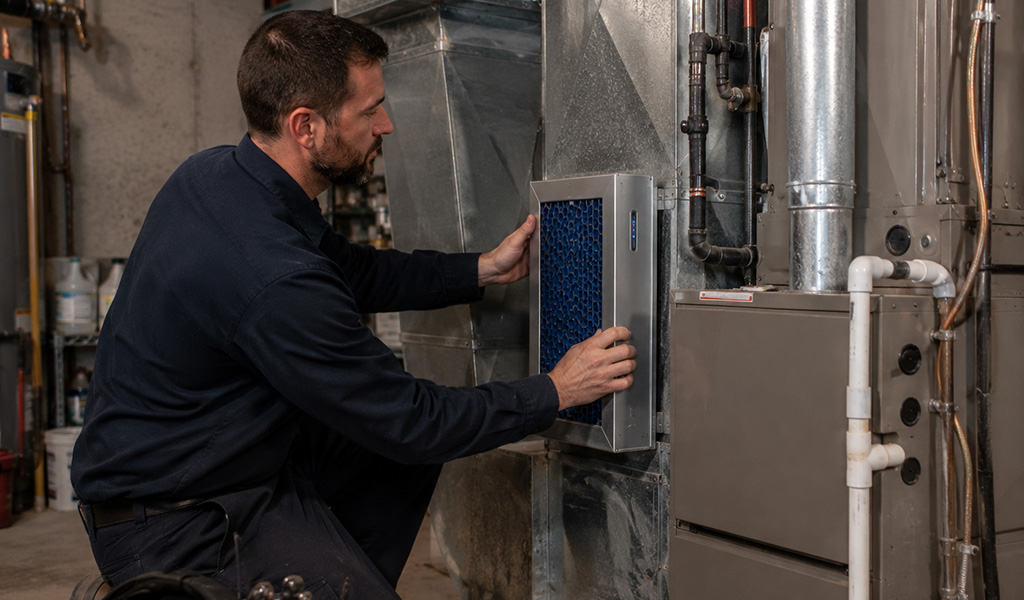
This is where filter rating matters more than most people realize. A standard fiberglass filter — the cheap kind sold in multi-packs — does almost nothing to stop PM2.5. You need a filter rated MERV 13 or higher to meaningfully capture wildfire smoke particulate, and even then, your system has to be able to handle the added static pressure without straining the blower motor. A higher MERV rating traps more particulate, but it also makes your blower work harder, which can mean the system draws more energy to push air through — another reason a professional assessment beats guessing at a filter upgrade on your own.
The EPA’s guide on air cleaners breaks down how MERV ratings actually correlate to particle removal, and it’s worth a read before you buy filters based on marketing claims alone rather than tested performance. There are several commonly used filter rating methods, including the Minimum Efficiency Reporting Value, which is based on a national consensus standard. For all rating methods, the higher the filter rating, the higher the removal efficiency for most particle sizes.
For homes that see heavy smoke exposure most summers, a whole-home electronic air cleaner does a better job than filter upgrades alone, since it’s built to handle continuous fine-particulate loads without choking your system’s airflow. If you’re weighing that option against a portable HEPA unit, the honest answer is that portables are fine for a single bedroom during a bad smoke week, but they’re not a substitute for whole-home filtration if smoke exposure is a recurring problem for you.

Allergens Build Up Faster Than You’d Expect
Pet dander, dust mites, tracked-in pollen, and basement mold are the usual suspects, and in the Front Range homes, they tend to concentrate in ductwork that hasn’t seen professional attention in years. Closing your windows during allergy season only helps if what’s already circulating through your vents is under control. A dirty duct system with a buildup of dust and allergens will keep recontaminating the filtered air, no matter how good your upstream filter is.
Basement mold is one of the most common culprits we find during a Front Range indoor air quality assessment, and it’s almost always a humidity problem before it’s a mold problem. Maintaining relative indoor humidity below 50% can prevent mold growth in the first place, which is why a dehumidifier or a properly balanced HVAC system matters more in Colorado basements than people expect, especially during the wetter stretches of spring and the monsoon-adjacent weeks in late summer.
If it’s been more than a couple of years since your ducts were inspected, or you’re noticing a musty smell the moment your furnace or AC kicks on, that’s usually the first sign worth addressing. Furnace cleaning isn’t just a heating-season task — a clean system moves air more efficiently and prevents the dust and allergen buildup that accumulates in ductwork over time from circulating.
Signs Your HVAC System Is Making Things Worse
A musty odor from your supply vents, visible dust buildup around registers, or allergy symptoms that noticeably worsen when the system runs are all signs that your HVAC setup is contributing to the problem rather than solving it. Humidity swings play a role, too — Colorado’s dry winters pull moisture out of the air, while basements can see humidity spike during wetter stretches of the year, creating conditions where mold gets a foothold.
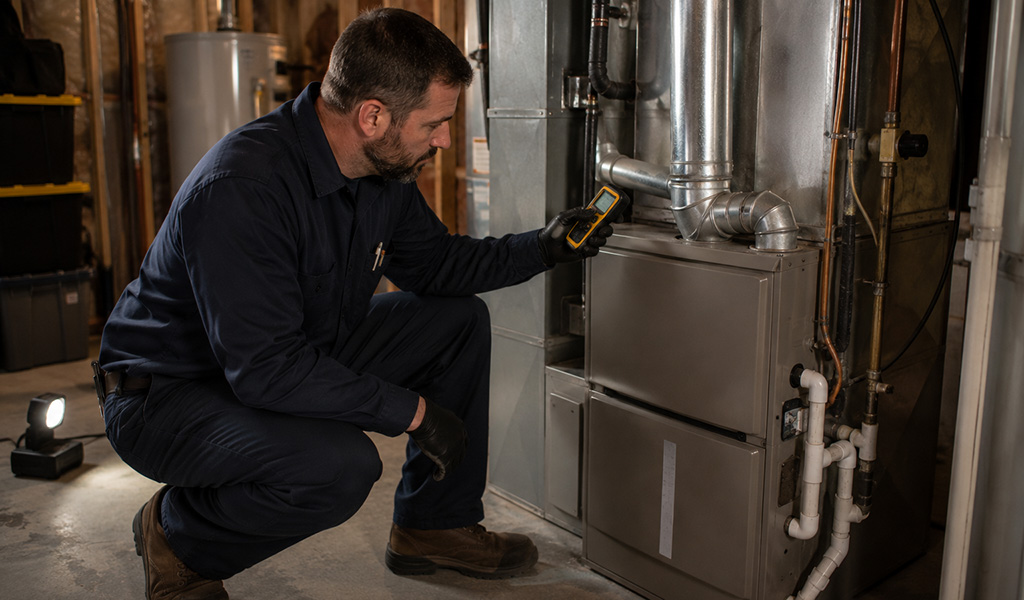
Soot buildup around a furnace cabinet or discoloration near a water heater flue is never something to ignore — it’s often a sign of incomplete combustion, which is how carbon monoxide ends up in your living space. CO is colorless and odorless, so you won’t smell a problem the way you would with a gas leak, which is exactly why we recommend pairing your indoor air quality assessment with a carbon monoxide test if your home has any gas-burning appliances. If you’re not already doing this annually, it’s worth adding to your fall maintenance checklist.
If you’re noticing any of these signs, it’s worth having a technician take a real look rather than guessing at filter upgrades and hoping for the best. Waiting rarely fixes it — contaminated air just keeps recirculating while the underlying cause goes unaddressed.
Air Quality Testing: The First Step Before You Buy Equipment
Before you spend money on a whole-home air purification system, air quality testing is the first step that actually tells you what you’re dealing with. Guessing at a solution based on symptoms alone often leads to buying equipment that doesn’t address the real source of contamination in your home.
A proper assessment measures particulate concentration, checks humidity levels, and can identify whether mold is a factor — something that becomes crucial after any water damage or previous remediation work, since mold spores can remain in wall cavities or ductwork long after the moisture problem itself is fixed.
High concentrations of dust, pollen, or particulate matter don’t always correlate with what you can see or smell. A majority of the homeowners we test are surprised by which room in the house has the worst readings — it’s rarely the one they expected.
Older homes across Federal Heights, Northglenn, Aurora, and Arvada built before 1978 may also have lead dust as a legacy contaminant, particularly during renovation projects, so that’s factored into the account whenever we’re testing a pre-1978 property. Testing takes the guesswork out of the equation and lets us give you recommendations that match the actual problem instead of a generic filtration package.
Air Purification Options and How Heat Pumps Fit In
Whole-home electronic air cleaners integrate directly with your existing ductwork and treat all the air moving through your system, which makes them the strongest option for homes dealing with recurring smoke exposure, heavy allergy symptoms, or multiple pets.
Portable HEPA units are a reasonable supplement for a bedroom or nursery, but they only treat the air in the room they’re sitting in. For most single-family homes on the Front Range, we typically recommend pairing a properly rated furnace filter with a whole-home air purification system rather than relying on portables alone — it’s a more complete solution, and it doesn’t require you to remember to run anything separately.
If you’re already considering a system upgrade, it’s worth noting that heat pumps handle humidity control differently than a standard furnace-and-AC setup, which can work in your favor for air quality.
A well-sized heat pump runs longer, lower-intensity cycles that keep humidity more stable and pull air through your filtration system more consistently than the short bursts of a standard AC unit. That’s a secondary benefit on top of the energy-efficiency gains, and it’s part of why we walk homeowners through heat pump options whenever an air-quality conversation overlaps with an aging AC or furnace.
A Note for Landlords and Property Managers
Indoor air quality isn’t just a homeowner issue. If you manage rental properties or commercial buildings across the Denver Metro area, air quality complaints from tenants are becoming more common during smoke season, and habitability expectations increasingly factor in ventilation and filtration adequacy.
Multi-unit buildings present a different set of challenges than single-family homes — shared ductwork, inconsistent maintenance history between units, and tenants who may not know to flag a musty smell until it’s a bigger problem. A proactive commercial AC maintenance and filtration plan across your portfolio is far cheaper than dealing with tenant complaints, unit turnover delays, or potential liability down the road.
Simple Steps You Can Take This Week
Replace your filter with at least a MERV 13-rated option if your system can handle it without straining the blower — check your owner’s manual or ask a technician if you’re not sure. Keep an eye on the EPA’s AirNow site during wildfire season, so you know when outdoor air quality warrants extra precaution indoors. And if you haven’t had your ductwork inspected in the last couple of years, that’s usually where hidden allergens and dust buildup are hiding.

When to Call a Professional: Indoor Air Quality Denver
If you’re dealing with persistent musty odors, worsening allergy symptoms indoors, or you just want a straight answer on whether your current filtration setup is doing its job, a real indoor air quality assessment beats guesswork.
Our NATE-certified technicians have spent years working in Front Range homes and understand exactly how altitude, a dry climate, and wildfire smoke season affect a typical HVAC system here. Every job comes with flat-rate pricing and our 12-year parts-and-labor warranty, so you know what you’re getting before we start.
The goal isn’t just to address a smoke event or an allergy flare-up — it’s to keep your Denver Metro area home comfortable year-round so you and your family can breathe easier, no matter what the season throws at your ductwork. Call (720) 735-9170 to schedule an assessment, or reach out through our contact form.
If you want a broader maintenance checklist to pair with this guide, our Indoor Air Quality Checklist for Denver covers routine upkeep tasks like humidity control and filter cadence in more depth.
FAQ: Indoor Air Quality in Denver
What is considered good indoor air quality in Denver?
Good indoor air quality generally means humidity levels between 30 and 60 percent, minimal dust and allergen buildup, proper filtration (MERV 13 or higher for particulate-sensitive homes), and adequate ventilation that prevents pollutants from concentrating indoors.
Does wildfire smoke really get inside a closed house?
Yes. Fine particulate matter from wildfire smoke is small enough to work through HVAC return intakes and small gaps around windows, doors, and building envelopes, even when everything is shut tight.
What MERV rating do I need to filter wildfire smoke?
MERV 13 or higher is generally needed to meaningfully capture the fine particulate matter found in wildfire smoke, though your HVAC system needs to be able to handle the added airflow resistance without straining the blower motor.
How often should I replace my air filter in Denver?
Most homes should replace filters every 1 to 3 months, but homes with pets, allergy sufferers, or heavy wildfire smoke exposure often need monthly replacement during peak season.
Is air quality testing necessary after water damage or mold remediation?
Yes. Mold testing is crucial after water damage or remediation work, since spores can remain in wall cavities, ductwork, or subflooring even after visible moisture is resolved. Testing confirms whether remediation was successful and identifies any lingering contamination.