



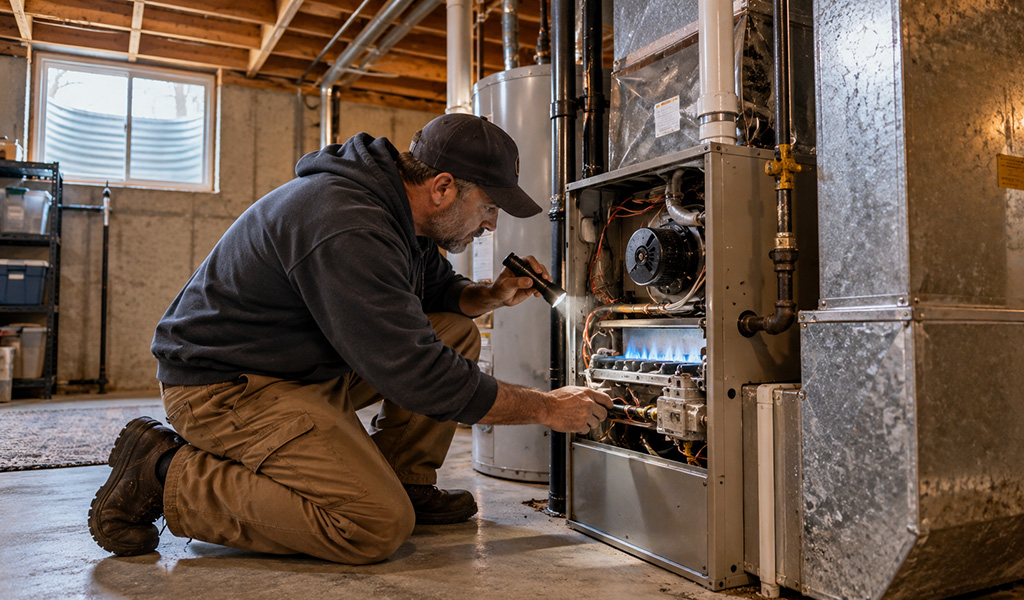
A furnace burning smell the first time you turn on the heat each fall is usually dust burning off the burners and heat exchanger, and it should fade within a few hours. If the smell lingers, gets stronger, or smells like hot plastic, wiring, or rotten eggs, it’s not normal. Shut the system down and have it checked.
Along the Front Range, that smell can show up more than once because a warm week between cold fronts lets dust settle again. Our NATE-certified technicians field these calls from homeowners every fall from Longmont to Littleton. Here’s how to tell which kind of smell you have.
Table of Contents
Is a Furnace Burning Smell Normal?
A Furnace Burning Smell at the start of the heating season is usually normal. All summer, dust settles on furnace components like the burners and heat exchanger. The first time the furnace kicks on, that dust cooks off, and the blower pushes a dry, toasty smell through every register in the house.
Manufacturers put the normal window for dust burn-off at roughly 30 minutes to a few hours of run time. Run the furnace, crack a window, and give it time. A brand-new furnace does something similar, since coatings and lubricants on new equipment burn off during the first heat cycles.
What’s not normal is a dust smell in your heating system that lasts into the next day, returns every time the furnace cycles, or gets stronger. At that point, you’re not smelling leftover summer dust. You’re smelling something the furnace keeps heating.
What Your Furnace Is Telling You: Matching the Smell to the Cause
Use this table as a quick reference for the common causes. Other smells point to different problems: a musty smell usually means moisture or mold in the ductwork, and an oily scent is mostly a concern with an oil furnace, which few Denver-area homes still have.
| What you smell | Likely cause | Shut it off? |
|---|---|---|
| Dusty or toasty | Seasonal dust burn-off or a clogged filter | No, unless it lasts past a day |
| Hot plastic, rubber, or electrical | Overheating blower motor, failing capacitor, or damaged wiring | Yes |
| Burning hair or debris | Pet hair, lint, or an object in a register or duct | Yes, until you find it |
| Sharp, acrid, or eye-stinging | Incomplete combustion or a venting problem | Yes |
| Smoky or chimney-like | Blocked flue or backdrafting | Yes |
| Rotten eggs or sulfur | Possible natural gas leak | Leave the house now |
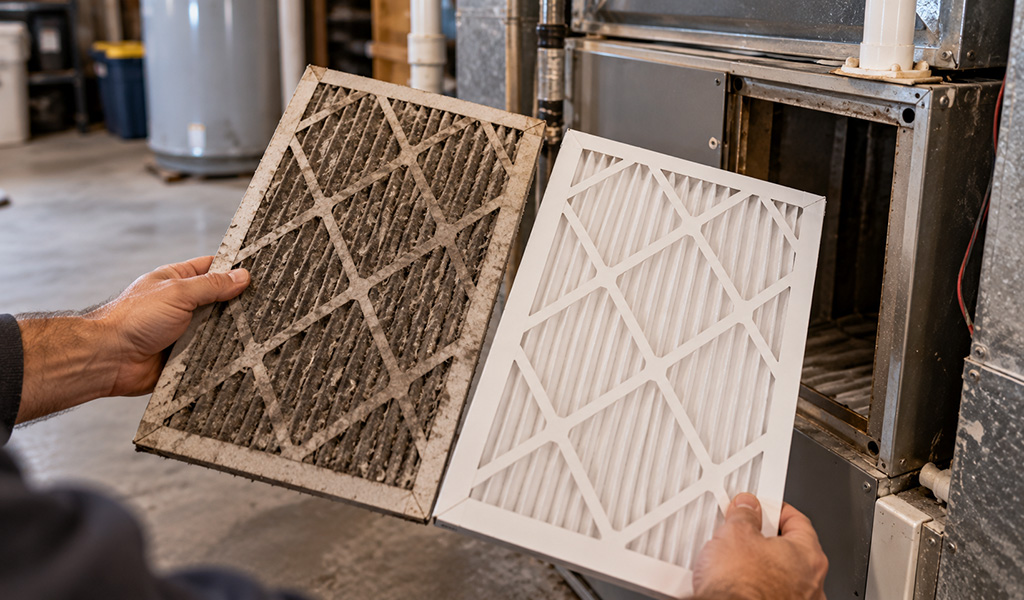
Dusty or Toasty: The Dust Smell and a Dirty Filter
If the dust smell won’t quit, pull the furnace air filter first. A dirty filter restricts airflow, making the furnace run hotter, and dust that slips past a clogged filter lands on hot surfaces. A fresh one settles more of these calls than you’d expect.
Burning Plastic Smell, Rubber, or Electrical Odor
After gas, we take this smell most seriously. Electrical burning smells usually mean something electrical is overheating: a blower motor straining against a dirty wheel or worn bearings, a capacitor on its way out, or wire insulation breaking down. Sometimes the furnace overheats, trips its high-limit switch, cools, and starts again, cooking a little more each cycle. Left alone, an overheating component can become an electrical fire. Turn it off at the thermostat and the service switch, and have an HVAC technician handle the furnace repair before you run it again.
Burning Hair or “Something Fell In”
Pet hair and lint collect in registers, and kids drop crayons and toys down floor vents more often than parents realize. If the smell is strongest in one room, pull that register cover and look. Debris deeper in the system calls for a thorough air duct cleaning.
Sharp, Acrid, or Eye-Stinging
A sharp, chemical smell that makes your eyes water often points to incomplete combustion: burners with the wrong air-fuel mix or flue gases that aren’t leaving the house properly. Those byproducts can travel with odorless carbon monoxide. Shut off the furnace, increase ventilation, and have the burners and venting inspected.
Smoky or Chimney-Like
A smoky smell near the furnace or water heater can mean a blocked flue or an appliance backdrafting exhaust into the house. We see this in older ranch homes across Northglenn, Thornton, and Westminster, where the furnace and water heater share a flue and a bird’s nest or a strong exhaust fan disrupts the draft.
Rotten Egg Smell or Sulfur
Natural gas has no odor on its own, so utilities add a sulfur-smelling odorant to make leaks noticeable. If you notice a rotten egg odor, don’t flip switches or try to relight anything. Get everyone out, then call 911 and Xcel Energy’s gas emergency line at 800-895-2999 from a safe distance. Xcel makes the area safe, but repairs to gas piping inside your home fall to a licensed contractor, which is where gas line repair comes in.
The Smell You Can’t Detect: Carbon Monoxide
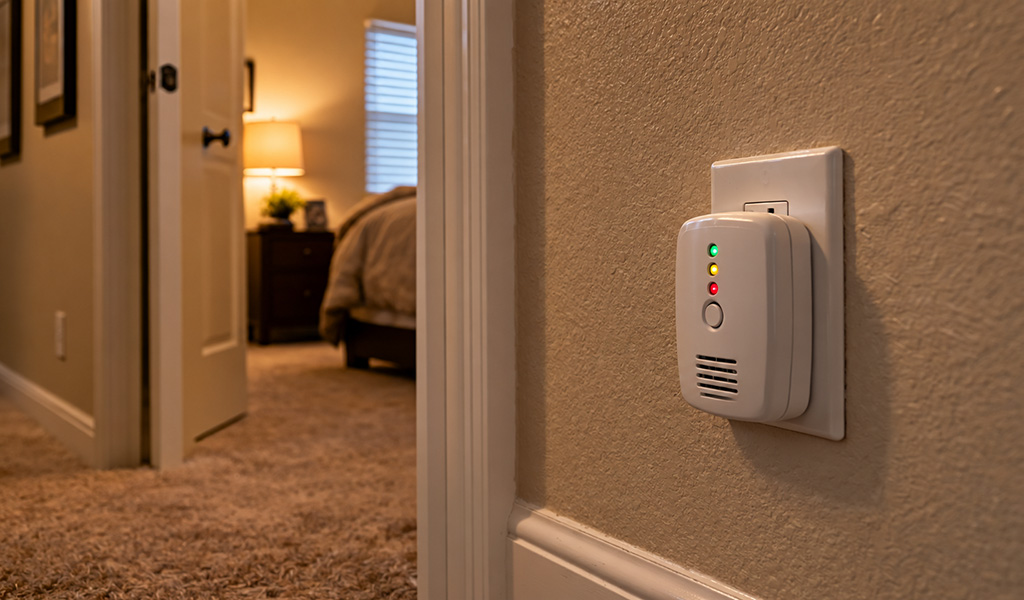
A burning smell tells you nothing about carbon monoxide, in either direction. The EPA describes carbon monoxide as colorless and practically odorless and lists leaking furnaces and backdrafting appliances among its common indoor sources. A furnace can smell perfectly normal and still leak CO.
You’ll also read that a cracked heat exchanger gives off a metallic or rotten-egg smell. In our experience, it rarely announces itself through your nose. We look for flame rollout, soot around the burners, a flame that dances when the blower kicks on, and elevated readings on a combustion analyzer. That’s why a working CO alarm is your real safety net. Headaches or flu-like symptoms that ease when you leave the house are a red flag, and professional carbon monoxide testing will settle any doubt.
What to Do Right Now When Your Furnace Smells Like Burning
- Name the smell. Dusty and fading is one situation. Plastic, smoke, or sulfur is another.
- If it smells like gas, leave first and call from outside. Skip every other step.
- If it smells electrical, smoky, or acrid, shut it down. Turn the thermostat off and flip the furnace’s service switch, usually a light switch on or near the unit.
- Check the filter and the registers in the room where the smell is strongest.
- Don’t keep resetting it. A furnace that shuts itself down and smells hot is protecting itself, and repeated restarts can turn a motor repair into a much bigger one.
Why Denver-Area Furnaces Throw Off More Smells
Furnace odors are more common here for a few reasons. Our long shoulder seasons mean furnaces start and stop for weeks, so the first-fire smell keeps coming back. Dry air helps static-charged dust cling to blower wheels. Late-summer wildfire smoke loads filters right before heating season, and for homes that deal with smoke every year, adding whole-home air purification to the HVAC system makes a real difference in indoor air quality.
Housing stock plays a role too. Many homes in Westminster, Thornton, Arvada, and Federal Heights date from the 1960s through the 1980s and still use original ductwork or aging furnaces. Add a finished basement where the furnace room doubles as storage, and boxes and laundry end up too close to a hot appliance. Keep at least three feet of clear space around it.

HVAC Guidance for Landlords and Commercial Property Owners
When a tenant reports that the heat smells like it’s burning, treat it as a safety report, not a comfort complaint. Ask what the smell is like, tell them to shut off the system if it smells like plastic, smoke, or gas, and schedule heating service. Document the call and the visit.
Colorado’s carbon monoxide alarm law for residential properties requires an operational CO alarm within 15 feet of each sleeping room in rentals with fuel-fired appliances, a fireplace, or an attached garage, and owners must replace missing or nonworking alarms before a new tenancy. Tenant turnover is a natural time to pair that check with a furnace safety inspection.
Gas-fired rooftop units on offices and retail spaces often push a burning smell through the diffusers on the first cold morning. A pre-season startup of each unit’s heat section heads off those calls, and our HVAC service for commercial properties covers rooftop and split systems.
Repair or Replace? When a Burning Smell Points to a Bigger Problem
Most burning smells end in a simple repair. The decision gets harder when a cracked heat exchanger or another major component fails on a 15- to 20-year-old furnace. A cracked heat exchanger is a safety failure in your heating system, and on older equipment, the repair often comes close to the cost of replacement, so new equipment often makes more sense. Our Denver furnace repair vs. replacement guide walks through that math. When replacement is the right call, a properly sized furnace installation from JD’s comes with a 12-year parts and labor warranty and flat-rate pricing.
Preventing Furnace Smells With a Fall Furnace Tune-Up
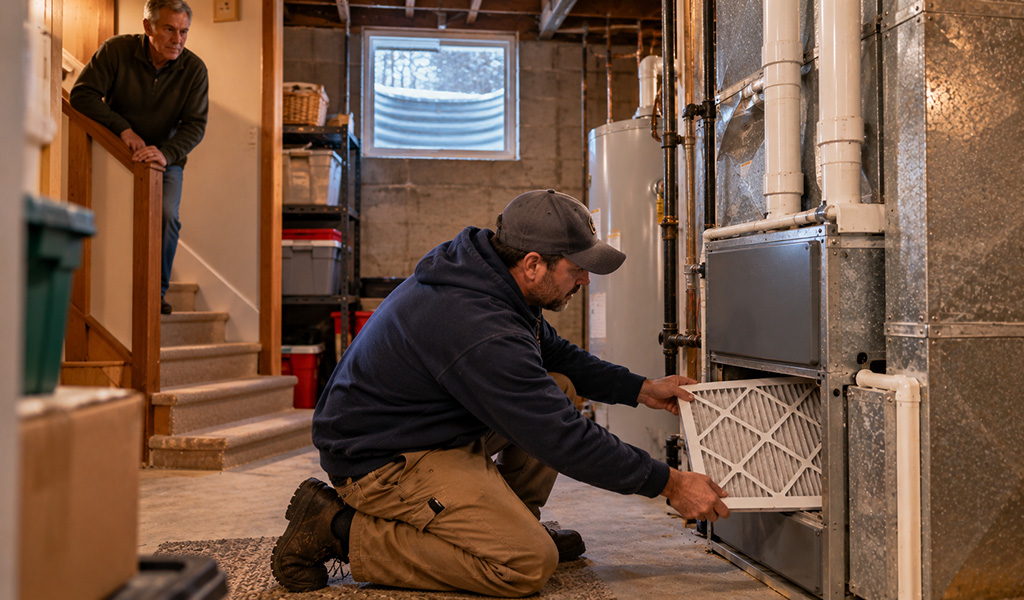
Routine furnace maintenance prevents most burning smells. Furnace filters are cheap, so start each season with a fresh one, check it monthly, and test your CO alarms twice a year. Then book a furnace tune-up before the first cold snap. A technician who cleans the furnace and checks the burners, blower, wiring, and venting will catch most of these problems before you notice them. Here’s why fall is the best time to schedule that visit.
Schedule Furnace Burning Smell Service With JD’s
Can’t tell which type of smell you have? That’s what a diagnostic visit is for. JD’s Plumbing, Heating and Air Conditioning has provided furnace services across the Denver Metro area since 2007 with licensed, NATE-certified technicians, same-day service, and flat-rate pricing with no surprise charges. Call (720) 735-9170 or request service online, and we’ll find the source and tell you straight what it needs.
FAQ: Furnace Burning Smell
How long should a furnace burning smell last?
The dusty smell from seasonal dust burn-off typically clears within 30 minutes to a few hours of run time. If it lasts into the next day, returns every time the furnace cycles, or gets stronger, check the filter and call a technician.
Is it safe to run my furnace if it smells like burning?
If it’s a faint, fading dust smell, yes. If it smells like hot plastic, wiring, smoke, or anything sharp enough to sting your eyes, turn the furnace off at the thermostat and the service switch and have it inspected before you run it again.
Can a furnace burning smell mean carbon monoxide?
Not directly. Carbon monoxide is practically odorless, so a burning smell can’t confirm or rule it out. Combustion problems that produce an acrid smell can also produce CO, which is why every home with a gas furnace needs working CO alarms.
Why does my furnace smell like burning plastic?
A burning plastic smell usually points to an electrical problem, such as an overheating blower motor, a failing capacitor, or damaged wire insulation. It can also come from a plastic object sitting in a register or duct. Shut the system off and have it checked.
Why does my heater smell like burning every fall?
Dust settles on the burners and heat exchanger over the summer and burns off the first time the furnace runs. In the Denver area, mild stretches between cold fronts can bring the smell back more than once. A fall tune-up and a fresh filter keep it short.
Why do my vents smell like they’re burning?
Usually it’s dust burning off the burners and heat exchanger the first time the furnace runs, and the blower carries the smell to every vent. If one vent smells stronger than the rest, check that register for debris. If the smell lingers or smells like plastic, shut the furnace off and call a technician.
What is the lifespan of a home furnace?
Most gas furnaces last roughly 15 to 20 years with regular maintenance. A furnace in that age range that starts smelling like burning, tripping safety limits, or needing major parts is usually a better candidate for replacement than repair.
Does carbon monoxide smell like burnt plastic?
No. Carbon monoxide is practically odorless, so you can’t smell it. A burnt plastic smell points to overheating electrical parts or debris, not CO. Only a working CO alarm or a combustion test can tell you whether CO is present.
What does it mean when you smell electrical burning but nothing is there?
An intermittent source is the usual culprit. A blower motor or loose wiring connection may only overheat while the furnace runs, so the smell comes and goes with each cycle. If the smell lines up with the furnace running, turn the system off until a technician checks it. If it doesn’t, have an electrician check outlets, switches, and fixtures.