



When your boiler breaks down or starts acting up, the question hits fast: should you fix it or replace it? The answer depends on more than just what’s cheapest today.
This Boiler Repair vs Boiler Replacement guide walks you through the real numbers, decision factors, and practical examples so you can choose the option that truly saves more money over time.
Table of Contents
Quick Answer: Boiler Repair vs Boiler Replacement – What Usually Saves You More?
For most homeowners in 2026, boiler repair saves money when the unit is newer than about 10–12 years old, and the repair cost stays under roughly 20–30% of what a new boiler would cost. A $400 circulator pump replacement on an 8-year-old system is usually a smart investment.
Boiler replacement often saves more in the long run when your unit is 15+ years old, has needed multiple repairs in the last 2–3 heating seasons, or when a single repair estimate hits 40–50% of a new system’s price. At that point, you’re often throwing hard cash at an old boiler that will keep costing you repairs, wasted fuel, and emergency calls.
For Colorado-area homeowners, realistic boiler replacement cost ranges look like this:
- Common repairs: Roughly $250–$1,200 depending on parts and labor
- Typical residential boiler replacement: Roughly $5,000–$12,000+ in 2025–2026, depending on size, energy performance, and installation complexity
The cheapest option today is not always the lowest cost over 5–10 years. That’s the key insight this article will help you understand. JD’s Plumbing, Heating and Air Conditioning helps local homeowners compare these numbers before they spend money either way—so you can make a decision based on facts, not guesswork.
Boiler Repair vs Boiler Replacement: What’s the Better Value?
Understanding the basic difference between repair and replacement helps you frame the decision correctly from the start.
Repair means fixing or replacing specific parts—a circulator pump, expansion tank, gas valve, thermostat, or control board—to get more years out of your existing boiler. Replacement means removing the old unit entirely and installing a new, higher-efficiency boiler, often with updated controls and venting.
Here’s how they compare:
- Short-term cost: Repair is usually lower upfront
- Long-term cost: Replacement can lower monthly heating bills, reduce repair frequency, and eliminate emergency service costs
- Risk level: Older boilers with repeated issues carry a higher risk of mid-winter failure when you need heat most
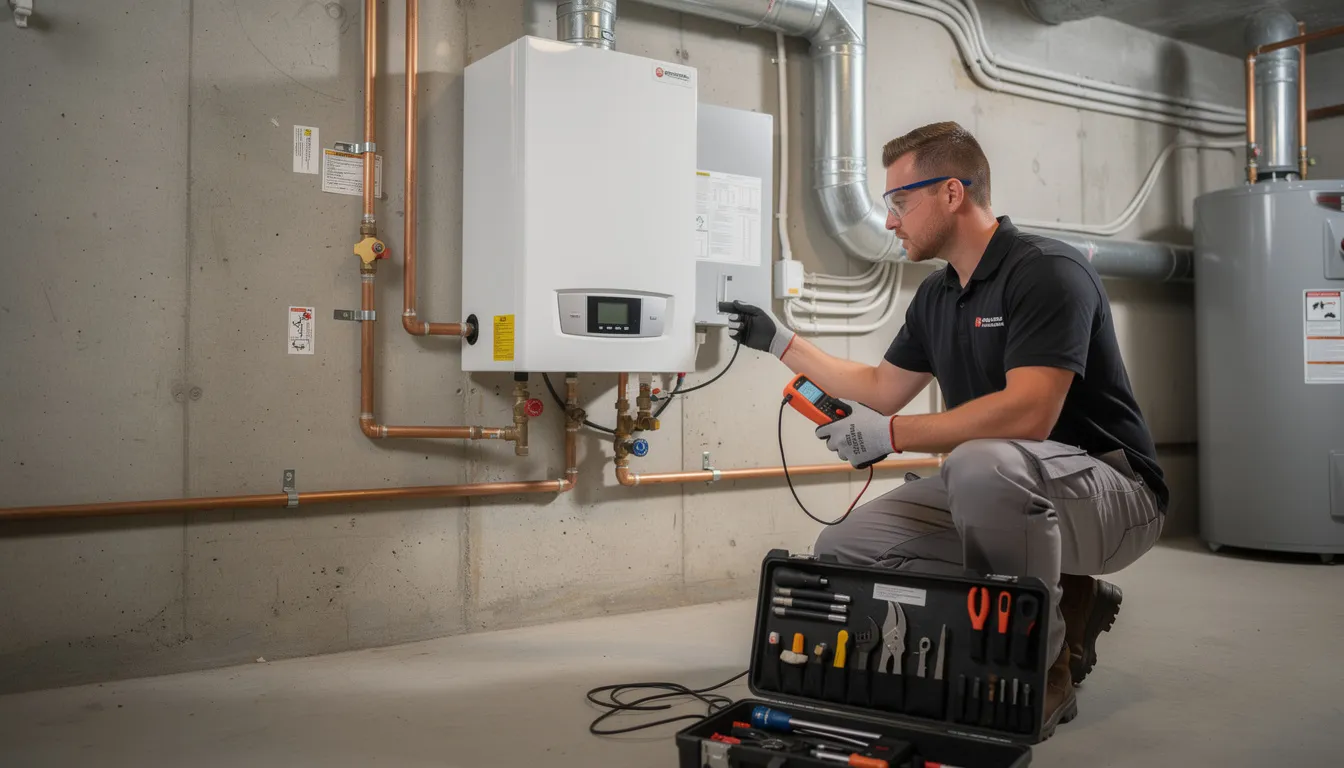
Consider two quick examples:
Example A: An 8-year-old boiler needs a $600 circulator pump replacement. The system has been reliable otherwise. Repair is likely to restore years of service and is clearly the budget-friendly choice.
Example B: A 20-year-old boiler needs a $2,000 heat exchanger replacement. A new high-efficiency boiler costs around $8,000. The old boiler also wastes fuel and could fail again soon. Replacement usually wins here because you get a new system with better efficiency, warranty protection, and far lower operating costs.
The better value depends on age, condition, repair history, operating performance, and safety—not just the price tag of today’s visit.
Pro Tip: Replacing a boiler typically costs between $4,000 and $10,000, depending on the size, type, and efficiency rating of the new system.
Boiler Repair Cost vs Boiler Replacement Cost
Understanding what drives costs helps you avoid surprises when you get estimates.
What Affects Boiler Repair Costs
Several factors determine whether a repair runs a few hundred dollars or climbs past $1,000:
- Type of failure: Sensors and controls are usually less expensive than major components like a heat exchanger, pump, or gas valve
- Timing: A standard weekday service call costs less than an emergency visit on a Saturday night in January
- Age and brand: Older or discontinued models can require more labor time and harder-to-find parts
- System access: Tight mechanical rooms and complex piping add time to any job
For many homes, minor repairs fall in the $250–$500 range. More involved repairs—especially those requiring major parts—can easily reach $800–$1,500 or more.
What Affects Boiler Replacement Costs
Replacement costs vary based on:
- Boiler type: Standard efficiency vs. high efficiency condensing units
- Fuel type: Natural gas, propane, or other options
- Size and output: Based on your home’s square footage and heat loss
- Venting changes: Chimney liner modifications vs. new PVC venting for modern boilers
- Code upgrades: New shutoff valves, expansion tank, controls, or zoning updates
For many Colorado-area homes in 2025–2026, replacement typically ranges from $5,000 to $12,000 or more. A well-chosen energy-efficient boiler can reduce gas use noticeably—sometimes cutting winter energy bills by 15–30% compared with a 20+ year-old unit.
The Cumulative Cost Problem of Boiler Issues
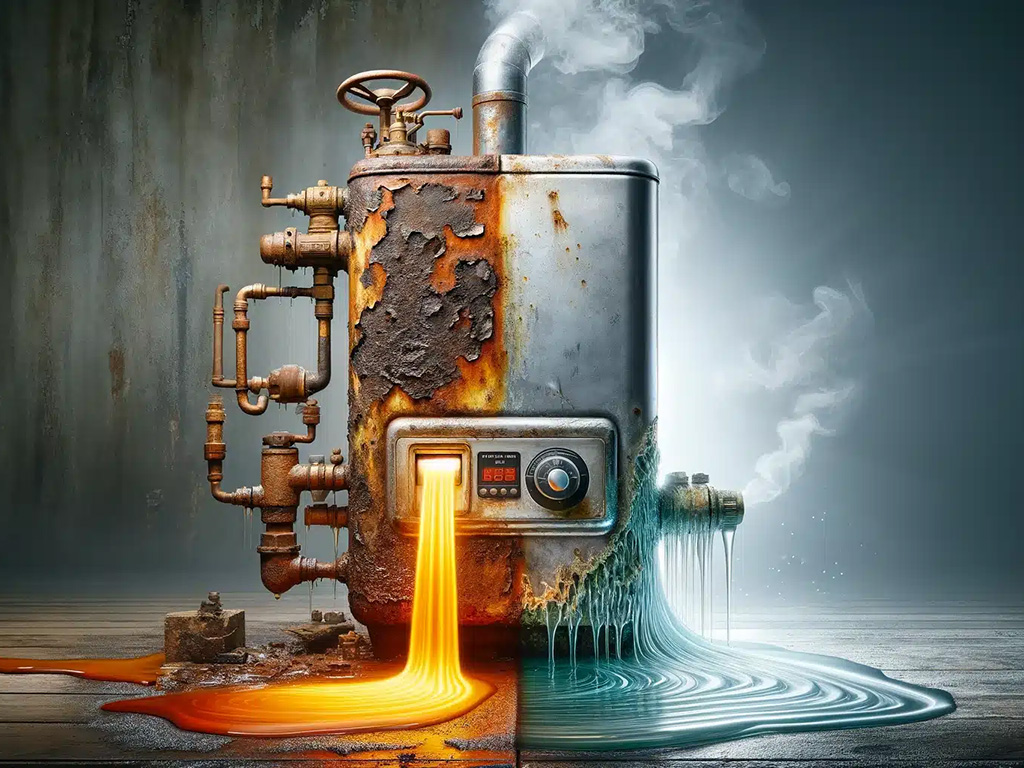
Here’s where many homeowners get caught: three or four $800–$1,000 boiler repairs over a 3–5 year span quietly add up to the price of a new boiler—without the benefit of better energy performance or a warranty.
Simple rule of thumb: If a single repair will cost more than about 40–50% of a properly sized new boiler, replacement is usually the better financial decision.
Expert Tip: The decision between repairing or replacing a boiler is primarily dictated by the 50% rule.
When Boiler Repair Makes Sense
Not every boiler problem means you need a new system. Many issues are repairable, and replacement isn’t always the right call.
Repair is usually the smart financial choice when:
- Your boiler is under about 10–12 years old with a generally good maintenance history
- This is the first or second significant repair, not part of a repeating pattern
- Repair cost is modest compared with replacement—under 20–30% of a new boiler estimate
- Issues are limited to peripheral components like a thermostat, circulator pump, relief valve, or ignition parts
Common Repairable Symptoms That are Cost Effective
- No heat or intermittent heat due to a failed circulator or control board
- Pilot or ignition issues that can be corrected with parts and proper adjustment
- Isolated leaks at fittings or valves that don’t affect the boiler body
- Minor unusual noises caused by air in the system or scale buildup that can be flushed out
Example scenario: A 9-year-old boiler breaks down in January. JD’s Plumbing, Heating and Air Conditioning diagnoses a failed pump and completes a $550 replacement. The system has no other major issues. Repair is clearly the affordable route here—you’re likely to get several more years of reliable service.
JD’s technicians will explain whether a repair is a “good investment” or just a temporary patch on a failing boiler.
When Boiler Replacement Saves More Money
Replacement is a big decision, but in some cases it clearly saves more over the next 5–15 years. Knowing when replacement makes sense helps you avoid wasting your hard-earned cash on an old boiler that’s past its useful life.
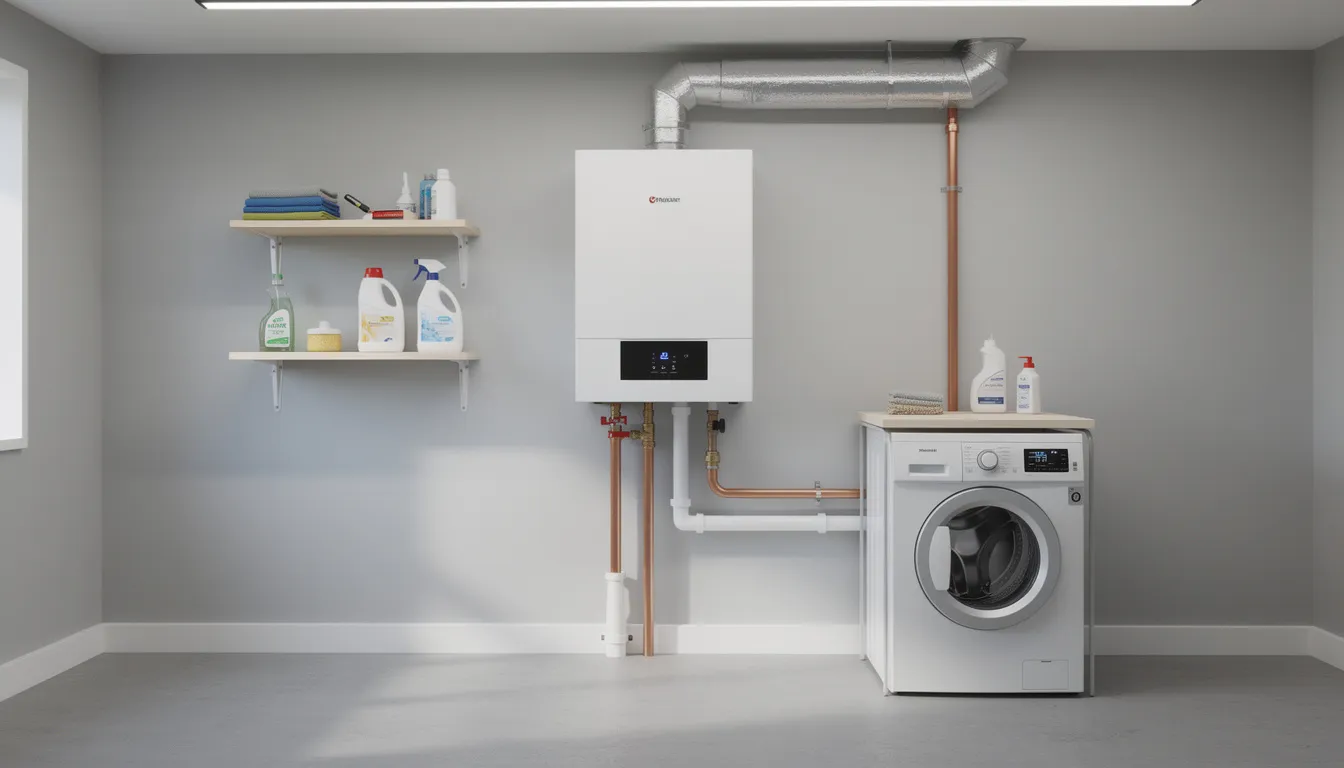
Key Triggers That Make Replacement the Better Choice
- Boiler age of 15–20+ years, especially if it’s a non-condensing, low-energy performance model
- Major component failure, such as a cracked heat exchanger or recurring control board issues
- One repair estimate that exceeds 40–50% of the cost of a new boiler
- A history of multiple breakdowns in the last 2–3 heating seasons
Long-Term Savings from a New Boiler
Modern boilers with AFUE ratings in the mid-80s to 90s can significantly reduce gas usage compared with systems from the 1990s or early 2000s. Over 10–15 years, lower fuel use plus fewer emergency calls can offset a large portion of the replacement cost.
You’ll also gain comfort and reliability benefits:
- More even heat and quicker warm-up times
- Quieter operation
- Less risk of waking up without heat during a cold snap
Practical example: A 22-year-old boiler needs $1,800 in repairs this winter. The homeowner also spent $900 on repairs two winters ago. An $8,500 high-performance boiler upgrade would cut winter heating bills, come with a new warranty, and eliminate the cycle of frequent repairs. The math clearly favors replacement here.
JD’s Plumbing, Heating and Air Conditioning helps homeowners run these numbers, including estimated payback windows based on current gas bills and boiler service life.
7 Signs It May Be Time to Replace Your Old Boiler
Seeing just one sign doesn’t guarantee replacement is needed. But multiple signs together are a strong signal to consider it.
Sign 1 – Advanced Age
Your boiler is 15–20+ years old, especially if it has never been upgraded for efficiency. Older equipment consumes more fuel and is more prone to cascading failures.
Sign 2 – Frequent Repairs
Two or more non-trivial service calls in a single heating season—or repeated calls over the past 2–3 winters—suggest your system is entering a failure cycle.
Sign 3 – Rising Energy Bills
Your winter gas bills are noticeably higher than previous years, but your thermostat settings and home use haven’t changed. This often indicates declining efficiency.
Sign 4 – Uneven or Inadequate Heat
Some rooms stay cold, it takes a long time to warm up, or the boiler short-cycles (turns on and off frequently without maintaining temperature).
Sign 5 – Visible Corrosion or Chronic Leaks
Rust on the boiler body, recurring leaks, or evidence of previous patch repairs at multiple spots indicate structural decline.
Sign 6 – Unusual Noises
Persistent banging, whistling, or gurgling that returns even after bleeding radiators or doing basic maintenance points to internal problems.
Sign 7 – Safety or Combustion Concerns
Yellow or orange burner flames, sooting, or previous warnings from a professional about venting or carbon monoxide risks are essential concerns that shouldn’t be ignored.
JD’s technicians inspect these issues and help you determine whether each sign points to a repairable problem or a larger replacement need, so you can make the right decision on boiler repair vs boiler replacement.
How Boiler Lifespan and Efficiency Affect Your Decision to Buy A New System
The years in service and efficiency directly influence both repair risk and monthly operating cost. Understanding this helps you determine whether your boiler is worth keeping or ready for retirement.

Typical Lifespan Ranges
- Modern condensing boilers: Around 15–20 years with proper regular maintenance
- Older cast-iron boilers: Can reach 20–30 years, but often at much lower efficiency and with higher fuel usage
Expert Tips for Regular Maintenance:
Scheduling annual inspections can help maximize your boiler’s lifespan and performance
Bleeding your radiators as needed is an important maintenance task for your boiler.
Keeping vents clean is essential for ensuring efficient operation of your boiler.
How Age Affects Your Boiler
Factor | Younger Boilers (Under 12 Years) | Older Boilers (15+ Years) |
|---|---|---|
Reliability | Generally dependable | Multiple components nearing the end of life |
Parts availability | Usually easy to source | Control boards and parts may be discontinued |
Efficiency | Mid-to-high AFUE ratings | Often 60–75% AFUE, wasting fuel |
Understanding Efficiency
AFUE (Annual Fuel Utilization Efficiency) is the percentage of fuel that actually becomes heat for your home. A 95% AFUE boiler wastes far less fuel than a 70% AFUE unit from the late 1990s.
Operating cost example: A homeowner spending $1,500 per winter on gas with an older 70% AFUE boiler could reasonably save $300–$450 annually after upgrading to a high-efficiency unit. Over 10 years, that’s $3,000–$4,500 in energy savings—a significant chunk of the replacement cost.
Summary: Boiler Heating System
- Younger, energy-efficient boilers with occasional issues are usually worth repairing
- Older, low-efficiency boilers with rising bills and repair history are strong candidates for replacement
JD’s Plumbing, Heating and Air Conditioning can check your model, serial number, and efficiency rating during a visit and translate that into estimated annual operating costs for your situation.
Simple Decision Framework: Repair or Replace Your Boiler?
Use this practical checklist before you commit to either option.

Step-by-Step Framework
Step 1: Check the service life of your boiler
- Under 10 years: Usually favor repair
- 10–15 years: Gray zone—depends on condition and repair history
- Over 15–20 years: Consider replacement more seriously
Step 2: Review your repair history
- How many service calls in the last 2–3 winters?
- What was the total cost of those visits?
Step 3: Examine your winter gas bills
- Are they climbing year-over-year without changes in usage?
- Could an inefficient boiler be the cause?
Step 4: Compare repair estimate vs. replacement estimate
- Is the repair under 25–30% of the replacement cost? → Lean toward repair
- Is the repair over 40–50% of the replacement cost? → Lean toward replacement
Step 5: Factor in comfort and safety
- Are rooms staying cold?
- Hearing unusual noises or seeing leaks?
- Any combustion or carbon monoxide warnings from previous inspections?
The Simple Decision Rule
Situation | Recommended Action |
|---|---|
Boiler under ~12 years, few repairs, current fix under 25–30% of replacement | Repair is usually smarter |
Boiler 15–20+ years, multiple repairs, current fix over 40–50% of replacement | Replacement is usually the better long-term value |
Rather than guessing, get a professional evaluation. JD’s technicians can provide both a repair quote and a replacement estimate, then walk you through the pros and cons on-site. There’s no pressure to replace a system that still has good life left—the goal is to help you avoid wasting money on the wrong option.
Schedule a Boiler Evaluation with JD’s Plumbing, Heating and Air Conditioning
Making the right choice between boiler repair and replacement starts with accurate information about your specific system. JD’s Plumbing, Heating and Air Conditioning can inspect your boiler, review its service life, efficiency, and condition, and provide both repair and replacement options with transparent pricing.
As a local company familiar with the types of boilers commonly installed in Colorado homes—and the demands of our winters—JD’s brings practical expertise to every evaluation. The team understands that your heating system is essential to your family’s comfort and safety.
Don’t wait for the next cold snap to find out your boiler has more problems. Schedule a visit during spring or fall when possible, though emergency service is available when you need it most.
Ready to get answers? Contact JD’s Plumbing, Heating and Air Conditioning for a boiler inspection, repair assessment, or replacement quote. Contact us today at 720-735-9170 to find out which is right for you: Boiler Repair vs Boiler Replacement!
The goal isn’t to sell you a new boiler—it’s to help you choose the option that truly saves more money and stress over the life of your heating system.
Boiler Repair vs Replacement FAQs
How long should a residential boiler last?
Many modern boilers last 15–20 years with proper maintenance. Some older cast-iron units run longer, but efficiency drops over time, and repair costs typically rise after year 15.
Is it worth repairing a 20-year-old boiler?
It depends on the repair cost and system condition. Major repairs on a 20+ year-old boiler are often not cost-effective because additional failures are likely, and efficiency is usually poor. Minor fixes may still make sense for short-term use.
Can a new boiler really lower my gas bill?
Yes. High-efficiency boilers with AFUE ratings in the 90s can significantly reduce fuel use compared with older 60–75% efficiency units. Exact savings depend on your home, usage patterns, and local gas rates.
Should I replace my boiler before it fails?
Planned replacement during the colder months can help you avoid emergency pricing, secure better scheduling, and compare options calmly. If your boiler is showing multiple warning signs, proactive replacement often makes more sense than waiting for a mid-winter failure.
How often should I service my boiler?
Annual professional maintenance helps maintain efficiency, safety, and, where applicable, warranty coverage. Regular maintenance also catches small problems before they become costly repairs.
Does domestic hot water come from my boiler?
Some boilers provide both heating and hot water (combi or indirect systems). If your boiler handles domestic hot water production, a failure affects both heating and your hot water supply—making reliability even more crucial.
Can JD’s Plumbing, Heating and Air Conditioning help me decide?
Absolutely. JD’s offers inspections and honest recommendations on whether Boiler Repair vs Boiler Replacement makes more sense for your specific situation. The team will assess your system and provide transparent pricing for both options.