



If you’ve ever pulled a “clean” glass out of the dishwasher and found it covered in a chalky film, you’ve met hard water. Water hardness measures the dissolved minerals—primarily calcium and magnesium ions—in your water supply, and it’s typically reported in parts per million (ppm) or grains per gallon (gpg), with soft water under 60 ppm and very hard water over 180 ppm.
Many homeowners in Colorado Cities with the Hardest Water deal with these mineral deposits every day, leading to cloudy dishes, scale buildup, and added wear on plumbing fixtures and water-using appliances.
Across the Denver Metro area, hardness varies more than most homeowners realize — not by city so much as by which municipal water system actually feeds your address. Highlands Ranch and other communities on Denver Water’s southern system run considerably harder than neighborhoods fed by the northern or mountain-sourced systems, and that difference shows up in your water heater’s lifespan long before it appears in a local water report.
We’ve tested drinking water in homes from Longmont to Littleton since 2007, and the pattern holds: two houses a few miles apart can have noticeably different hardness depending on the pipe network and regional geology behind them. Here’s what’s actually driving that variation, which cities tend to run hardest, and what it means for your plumbing.
Table of Contents: Colorado Cities with the Hardest Water
How Water Hardness Is Measured: Grains Per Gallon, mg/L, and Dissolved Minerals
Water hardness gets reported two ways: milligrams per liter (mg/L), which is the same as parts per million (ppm), or grains per gallon (gpg), which is what most water softener companies and test strips use.
One gpg equals roughly 17.1 ppm. The U.S. Geological Survey classifies water as soft at 0–60 mg/L, moderately hard at 61–120 mg/L, hard at 121–180 mg/L, and very hard above 180 mg/L, a range based on the amount of dissolved calcium and magnesium ions in the water. Some water treatment sources add a fifth tier — extremely hard — for anything above roughly 250 ppm (about 14.5 gpg), which is where you start seeing the most aggressive scale buildup on fixtures and appliances.
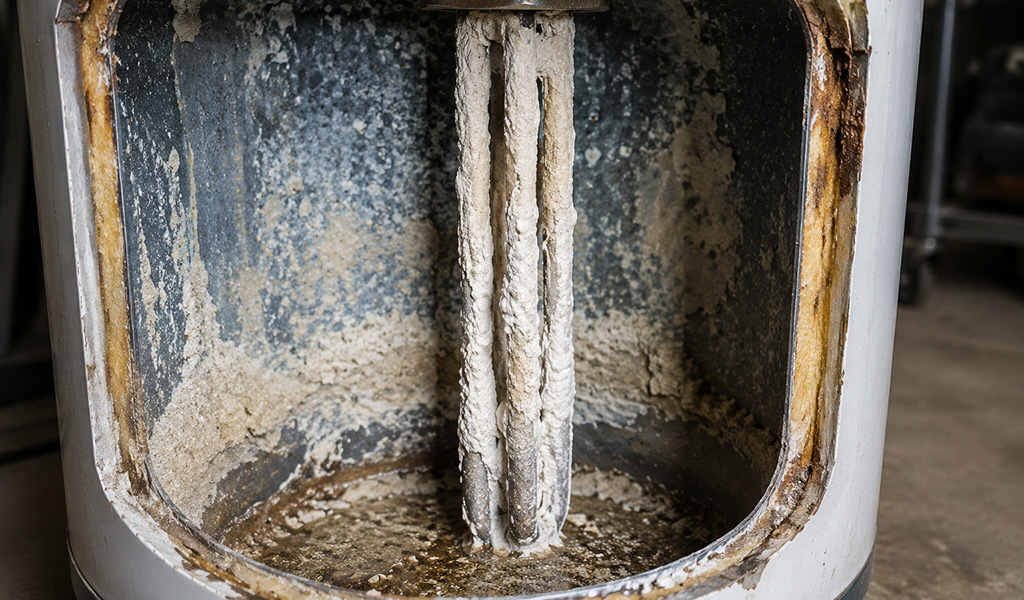
That number matters for a practical reason: it’s the single biggest predictor of how much maintenance your water heater, dishwasher, and kitchen sink will need over the next decade. A house on relatively soft water might go years without noticing scale. A house on high-concentration, mineral-heavy water can see measurable buildup inside a tank water heater within two to three years.
Why the Front Range Has Such Inconsistent Water Hardness Block to Block
Colorado’s regional geology is the root cause. Water that runs off granite and volcanic terrain in the high country stays relatively soft, while water that spends more time moving through limestone, dolomite, or other mineral-rich soils and rock formations picks up calcium and magnesium along the way — a slow, natural process as water moves through the ground before it ever reaches a treatment plant.
Denver Water uses two main collection systems for its municipal supply. The southern system, sourced largely from the South Platte River, is considered moderately hard, while the northern system — which draws on tributaries of the Colorado River, including the Fraser and Williams Fork Rivers — is considered somewhat soft. Which one reaches your tap depends on where you live within the metro area, not just what city you’re in.
Denver’s water also runs slightly harder in winter, when reservoirs freeze, and the water absorbs more minerals, and softens back down from late spring through fall as mountain snowmelt runoff dilutes the concentration. So even a single address doesn’t have one fixed hardness number — it has a seasonal range, which is part of why water hardness data from a single test can look different depending on when you pulled the sample.
Colorado Cities and Suburbs Ranked by Water Hardness, Longmont to Littleton
Highlands Ranch sits at the harder end of our service area. Highlands Ranch Water draws its primary supply from the South Platte River, and hardness there typically runs 11 to 13 grains per gallon, or 188 to 222 milligrams per liter — solidly in the very hard category, and among the higher readings of any community in the metro.
Castle Rock and pockets of southern Douglas County run similarly hard, largely because they draw on mineral-rich groundwater from deep aquifers rather than mountain runoff — groundwater has more contact time with mineral-bearing rock, so it tends to pick up more calcium and magnesium before it ever reaches a treatment plant.
Denver’s Water: Why One Number Doesn’t Tell the Whole Story
Denver proper is more of a mixed bag than most people assume, precisely because of the two-collection-system split described above. Homes on the southern system run moderately hard; homes fed primarily by the northern system trend softer.
Some third-party water-hardness databases report Denver’s water hardness as relatively soft, around 72 ppm, while others put the citywide figure considerably higher — the spread itself is the real story, since it reflects the same north-south split in Denver Water’s own municipal supply rather than one consistent number. If you live in Denver and aren’t sure which system serves your block, Denver Water’s own water quality reporting is a more reliable way to check than relying on a single citywide average.
Westminster and Northglenn generally test on the harder side of moderate, consistent with their position along the South Platte corridor. Some water-hardness databases put Westminster’s reading at around 117 ppm (roughly 6.8 gpg), which would place it solidly in the moderately hard to hard range — a figure Westminster’s own utility hasn’t published directly in the water quality reports we reviewed, so treat it as directional rather than official.
Thornton, Arvada, and Commerce City tend to fall within a similar range, though — as with Denver — the exact number depends on which reservoir and treatment plant are actually supplying a given neighborhood. Statewide, Pueblo is consistently cited as having some of the hardest water in Colorado, well outside our service area, but useful context for how much hardness can vary across the state.
Longmont is where the data is genuinely inconsistent across sources, with some reporting notably soft readings and others describing typical Front Range hardness for the area. Rather than repeat a number we can’t verify against Longmont’s own utility reporting, the honest answer is: it varies enough by neighborhood that a home water test is worth more than a citywide statistic.

Littleton and Broomfield fall into the same category — moderate hardness is a reasonable expectation given their position in the metro, but neither has a single authoritative figure that applies uniformly across the whole city.
The takeaway across all of these cities: a citywide average is a starting point, not a diagnosis. Two homes on the same street can draw from different mains, and the mix of geology and water sources is what’s really making cities like Highlands Ranch and Castle Rock run harder than their northern neighbors. If you want a precise number rather than a regional estimate, that’s exactly what an in-home water test is for.
Signs Your Drinking Water Is Hard, Regardless of What Your City’s Average Says
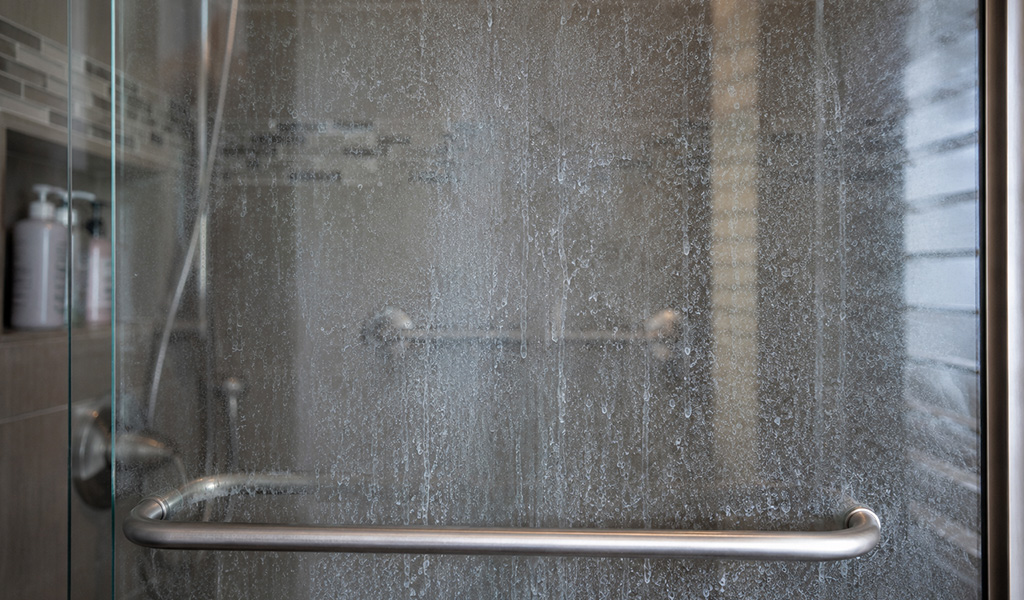
You don’t need a lab report or a box of test strips to suspect hard water, though both can confirm it. Watch for a white or chalky film on shower doors and faucets, soap scum that builds back up within days of cleaning, spots on glassware, even straight out of the dishwasher, and soap or shampoo with reduced effectiveness — it just won’t lather the way it should.
Many homeowners also notice skin or hair that feels dry after a shower, no matter how much conditioner they use. Inside the walls, the more expensive signs are reduced water pressure from scale narrowing your pipe diameter, and a water heater that’s noisier or slower to recover than it used to be — both point toward mineral buildup accumulating where you can’t see it. These are common hard water problems in most households in the metro’s harder-water pockets, and they tend to show up gradually enough that many residents adjust to them rather than address the cause.
What Hard Water Actually Costs You Over Time
The nuisance stuff affects daily life, but the real cost of hard water shows up in your energy costs and your appliance replacement schedule. Scale insulates the heating element in a tank water heater, forcing it to run longer to reach the same temperature, which means higher energy use for the same amount of hot water, month after month. Flushing a water heater once a year to clear sediment buildup helps offset this, since sediment left in place decreases efficiency over time. Even with regular flushing, homes on very hard water tend to see shorter tank lifespans than homes on soft or moderately hard water.
Dishwashers and washing machines see the same effect on a smaller scale — more detergent needed to achieve the same level of cleanliness, more mineral residue left behind on fabric and dishware, and internal components wearing out faster under high water hardness levels across the Denver Metro area.

If your home has older galvanized or copper supply lines, long-term scale buildup can also narrow the interior diameter of the pipe itself, which is part of why some older Denver Metro homes experience a gradual, hard-to-diagnose drop in water pressure over the years rather than a sudden failure.
Water filtration for taste and odor is a separate conversation from hardness — a carbon filter improves how your tap water tastes, but it won’t affect the calcium and magnesium ions that cause scale, which is where a softener or conditioner comes in.
Is a Salt-Based Water Softener (Ion Exchange) Worth It in Your City
If your home tests above roughly 7 gpg (about 120 ppm), a softener starts to pay for itself through extended appliance life and lower energy use — that threshold covers most of Highlands Ranch, much of Douglas County, and a meaningful share of addresses in Westminster and Northglenn. Below that range, the case is less clear-cut.
Salt-based water softeners effectively remove calcium and magnesium through ion exchange, swapping hardness minerals for sodium or potassium as water passes through the system — this is the most thorough and proven method for eliminating hardness rather than just managing its symptoms.
Salt-free systems, by contrast, can reduce scale buildup on surfaces but don’t actually remove hardness from the water, which is an important distinction if your goal is to protect a tankless water heater or high-end fixtures rather than just reducing surface buildup. Some homeowners choose salt-free conditioners anyway, particularly if outdoor irrigation or septic considerations make a traditional salt-based softener less appealing.
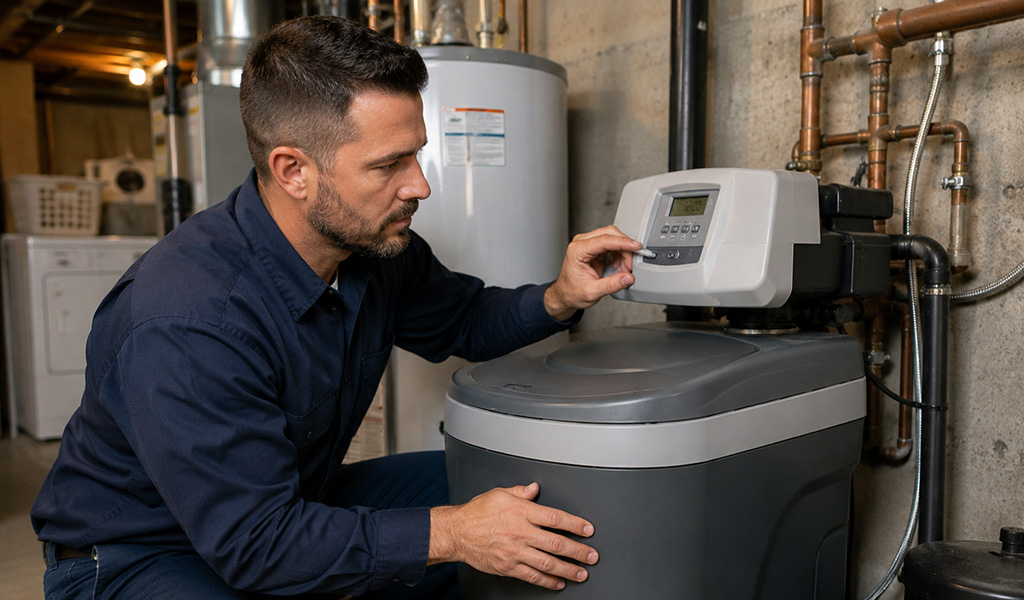
The honest starting point isn’t a citywide average, though — it’s a water softener sized to your home’s actual test results and household water usage, typically installed at the point where the main line enters the house. Guessing based on a neighborhood reputation for hard water usually means either an undersized system that regenerates constantly or an oversized one you paid extra for and don’t need.
How JD’s Tests and Treats Hard Water Across the Denver Metro Area
We’ve pulled water samples from Longmont to Littleton long enough to know that the citywide numbers only tell part of the story — the block-by-block variation is real, and it’s why we test before we recommend anything.
If your fixtures are showing scale, your water heater is working harder than it should, or you’re just tired of spotty glassware, a free in-home water test with any other service call gives you an actual number instead of a regional guess.
From there, we can walk you through the right solution for your specific water, your household size, and your budget — no upsell, just what the test results actually call for. Call JD’s Plumbing (720) 735-9170 to get on the schedule. Learn more about Colorado Cities with the Hardest Water in the Denver Metro Area.
FAQ: Colorado Cities with the Hardest Water
What’s considered “hard water” in Colorado?
Water above 121 mg/L (about 7 grains per gallon) is classified as hard, and above 180 mg/L (roughly 10.5 grains per gallon) is considered very hard. Much of the Denver Metro area falls somewhere in the moderately hard to hard range, with pockets — like Highlands Ranch — running consistently very hard.
Which Denver Metro city has the hardest water?
Highlands Ranch has some of the most reliably documented hard water in the metro, with its own water district reporting 11 to 13 grains per gallon. Areas relying on mineral-rich groundwater from deep aquifers, such as parts of southern Douglas County, tend to have similarly high levels.
Does hard water affect my water heater’s lifespan?
Yes. Mineral deposits build up on heating elements and inside the tank, reducing efficiency and increasing the energy needed to heat the same amount of water. Left untreated, this can shorten a water heater’s usable life by several years compared to one running on soft or moderately hard water.
How do I find out my exact water hardness at home?
The most reliable way is to use an in-home test rather than relying on a citywide average, since hardness can vary by neighborhood and even by the water collection system serving your specific address. JD’s offers a free water test with any other scheduled service call.