



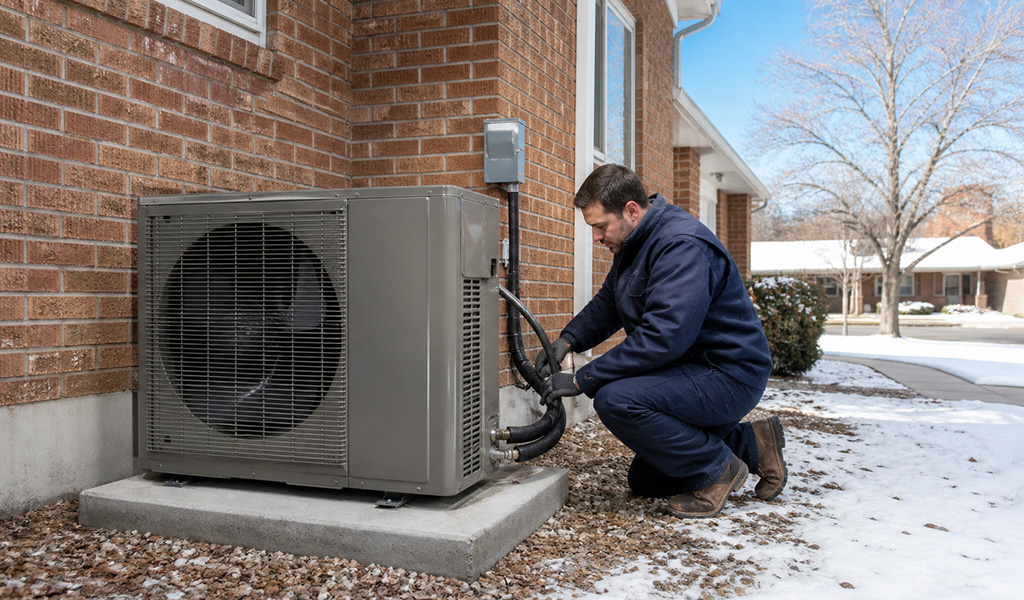
Heat pump installation Denver — it’s one of the most common requests we get, and honestly, that makes sense. Energy costs keep climbing, HVAC technology has advanced faster in the past five years than in the previous two decades, and federal incentives have made energy-efficient systems that once felt financially out of reach much more realistic. But there’s also a lot of noise out there — marketing claims, half-true comparisons, and advice from people who’ve never actually installed a system at 5,280 feet in a Colorado winter.
So here’s the straight version from a company that has been installing heat pumps in the Denver area since 2007.
Table of Contents – Heat pump installation Denver
Cold Climate Heat Pumps: Do They Actually Work in Denver?
This is the first question almost every homeowner asks, and it’s the right one to start with. The short answer is yes — with the right equipment. The longer answer requires some context.
The skepticism stems from older heat pump technology, which struggled significantly when outdoor temperatures dropped below 30–35°F. In a place like Atlanta or Portland, that’s a manageable limitation. In Denver, where January nights can drop to single digits, and cold snaps below zero aren’t unusual, it used to be a dealbreaker. That reputation stuck — but the equipment has moved well past it.
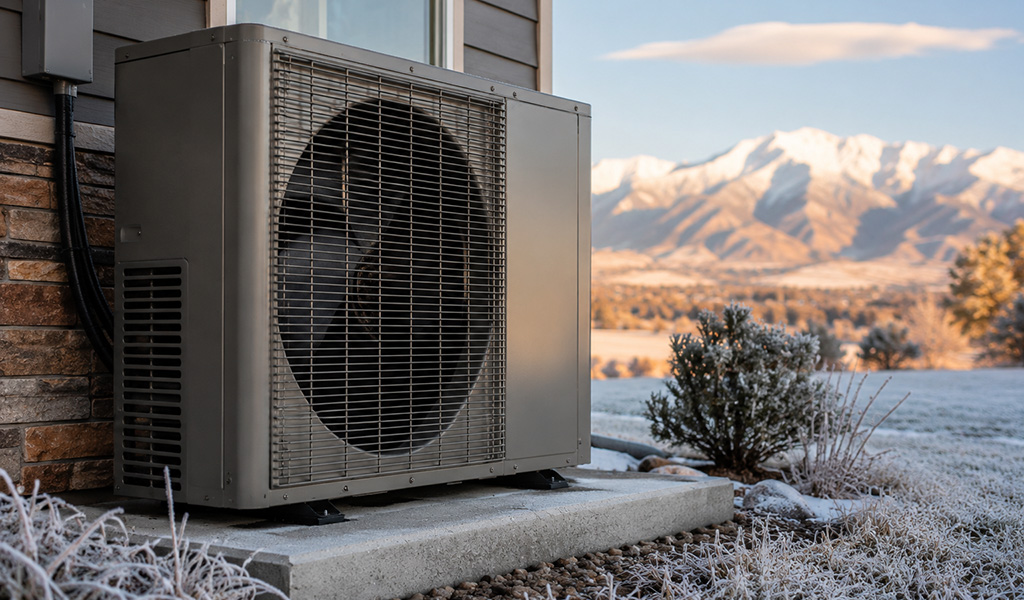
Modern cold-climate heat pumps are a different machine entirely. Variable-speed inverter compressors — the technology driving today’s high-performance systems from manufacturers like Carrier and Trane — are designed to operate efficiently at temperatures as low as -13°F to -15°F, making them well-suited to Denver’s winter conditions.
The Northeast Energy Efficiency Partnerships (NEEP) maintains a database of cold-climate heat pump performance data that shows exactly how these units perform at low temperatures — and the results are meaningfully better than what heat pump critics typically cite.
Denver’s climate adds one wrinkle worth noting: altitude affects refrigerant behavior and equipment sizing. A properly credentialed installer will account for this during the load calculation. An installer cutting corners won’t, and you’ll feel it in performance and on your utility bills.
The dry air on the Front Range actually works in your favor. Unlike moderate climates with high humidity, where heat pumps struggle with coil frosting in cold, wet conditions, Denver’s low humidity means defrost cycles are less frequent and less energy-intensive. For most of the heating season — October through early December and March through April — a properly sized heat pump handles your home’s load without breaking a sweat.
The honest caveat: during Denver’s coldest stretches, a standalone heat pump will still operate in heating mode, but efficiency drops, and it may run nearly continuously to maintain the setpoint. That’s where the dual-fuel approach becomes worth discussing.
Heat Pump Installation Cost in the Denver Area: What to Expect
Real cost ranges matter here because the spread is wide and the variables are significant. For a typical Denver Metro home — a ranch or two-story between 1,200 and 2,500 square feet with existing forced-air ductwork in reasonable condition — installed costs generally run between $5,500 and $12,000 for an air-source heat pump system. Dual-fuel systems (a heat pump paired with a gas furnace) typically cost $8,000 to $15,000+, depending on whether the furnace is new or existing.
Several factors drive the higher end of that range.
Ductwork condition. Leaky, undersized, or deteriorating ductwork is the silent performance killer in older Denver Metro homes — particularly the post-war ranch-style construction common in Northglenn, Westminster, and Federal Heights. A heat pump moving conditioned air through ducts that lose 25–30% to leakage is an expensive disappointment. If your ducts need work, address it before installation.
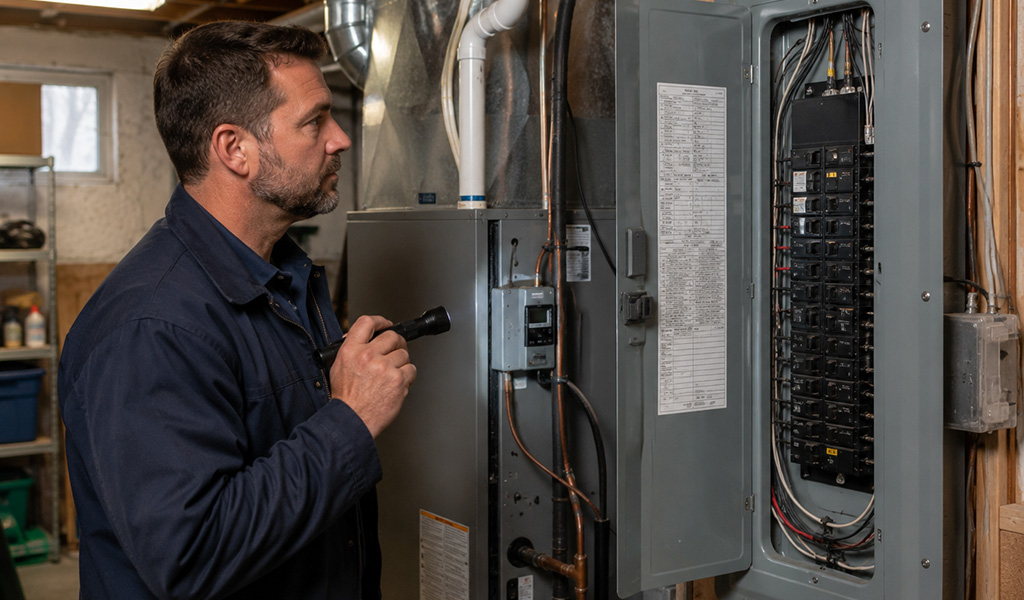
Electrical panel capacity. Heat pumps generally require a dedicated 240V circuit, which may necessitate upgrading the electrical panel to 200 amps in older homes. Many Denver homes built before the 1980s have 100-amp service that is simply inadequate. Panel upgrades typically add $1,500–$3,500 to the project.
Equipment tier and tonnage. A 2-ton system for a smaller home runs less than a 4-ton system for a larger one. Variable-speed, cold-climate-rated systems cost more upfront than single-stage equipment, but the efficiency difference over a Colorado heating season is real and measurable. An oversized unit short-cycles, wears components faster, and never delivers the comfort or efficiency it’s rated for — proper sizing is non-negotiable.
Refrigerant type. New heating system installations must use modern, low-Global Warming Potential (GWP) refrigerants in accordance with local codes. This is worth confirming with your installer — it affects both compliance and long-term serviceability.
Heat rebates and incentives. This is where the cost picture changes considerably for most homeowners. Xcel Energy offers rebates of $2,250 per heating ton for cold climate heat pumps and $900 per cooling ton for standard models, with an additional $1,000 available from the state. Income-qualified households at or below 150% of the Area Median Income (AMI) may qualify for HEAR rebates of up to $8,000, though funding for this program is limited in certain regions.
Combined with the federal 25C tax credit — up to 30% of installation costs, capped at $2,000 for qualifying equipment — most customers in the Denver area save an average of $9,500 through a combination of Xcel Energy rebates and the Colorado state heat pump tax credit. Energy Star’s federal tax credit resource has current documentation requirements and qualifying equipment.
At JD’s, we use transparent pricing — flat-rate quotes with no surprise add-ons after the job is underway.
Air-Source vs. Dual-Fuel: Which Heat Pump System Makes Sense in Colorado?
If you’re comparing these options, here’s the clearest framing.
An air-source heat pump is an all-electric system that handles both heating and cooling from a single outdoor unit by transferring heat rather than generating it. In cooling mode, it moves heat from inside your home to the outside air — the same principle as a central AC. In heating mode, it reverses the process, extracting warmth from outside air even in cold weather and moving it inside. It’s an energy-efficient approach that eliminates reliance on natural gas entirely and provides year-round comfort from a single system. For homeowners targeting an all-electric home — or landlords managing properties where simplicity and low maintenance matter — this is the direction things are heading.
A dual-fuel system combines an energy-efficient heat pump with a gas furnace that automatically takes over as a secondary heat source when temperatures drop. The heat pump serves as the primary system during moderate weather, which accounts for the majority of your heating hours in Colorado. When temperatures drop below the heat pump’s efficiency threshold — often called the “balance point,” typically set between 30°F and 40°F depending on the system — the gas furnace kicks in automatically. The heat pump handles the cheaper-to-run hours; the gas furnace handles the extreme cold. This approach works especially well when switching from an existing gas system, since you’re keeping the existing infrastructure in place.
Mini-split heat pumps are worth a separate mention. They provide both heating and cooling without ductwork, making them ideal for homes without existing HVAC systems, additions, garage conversions, or accessory dwelling units. If you’re adding conditioned space rather than replacing a central system, a mini-split is often the most efficient and cost-effective path.
Air-to-water heat pumps are a newer option gaining ground in the Denver area. They can provide hydronic radiant floor heating and domestic hot water from a single system — a high efficiency solution for new construction or whole-home mechanical overhauls where radiant heat is already planned.
For most Denver Metro homeowners with an existing gas furnace that isn’t at the end of life, a dual-fuel setup often makes the most financial sense as a transition strategy. You’re adding heat pump efficiency during the bulk of the heating season without abandoning a reliable backup on the nights it gets to -5°F. For homeowners whose old furnace is already due for replacement, a cold-climate air-source heat pump with the current incentive stack is worth serious consideration.
Neither answer is universal. The right choice depends on your home’s size, insulation quality, existing equipment, utility rate structure, and how cold your specific location runs. That’s what a proper site assessment resolves.
What Heat Pump Installation in Denver Actually Looks Like
A professional heat pump installation in the Denver area isn’t a one-size-fits-all swap. Here’s what the process should include — and if a contractor skips any of these steps, that’s a meaningful red flag.
Load calculation. Before any equipment is selected, a Manual J load calculation should be performed. This determines exactly how much heating and cooling capacity your home requires based on square footage, insulation, window area, orientation, and local Denver climate data. An oversized unit short-cycles, causes increasing wear on the compressor, and underperforms on humidity control. Undersized equipment runs constantly and still can’t keep up on the coldest days. Neither outcome is acceptable in a proper installation.
Site assessment. The technician evaluates your existing ductwork, electrical panel capacity, refrigerant line routing options, and outdoor unit placement. In Colorado, pad elevation matters — your outdoor unit needs clearance above typical snowpack. Hail guard protection is worth discussing at installation, given how often Front Range hailstorms damage outdoor HVAC equipment.
Permits and engineering documentation. Installing a heat pump requires navigating emissions regulations and obtaining local permits. Denver requires specific mechanical and electrical blueprints prepared by a professional engineer for heat pump installation permits. Local zoning and environmental reviews are also required for new exterior ground-mounted equipment to ensure compliance with municipal regulations. Westminster, Thornton, Arvada, and Northglenn each have their own requirements — a qualified contractor handles this as a matter of course, not as an optional extra. A contractor who suggests skipping the permit is saving their time at your expense.
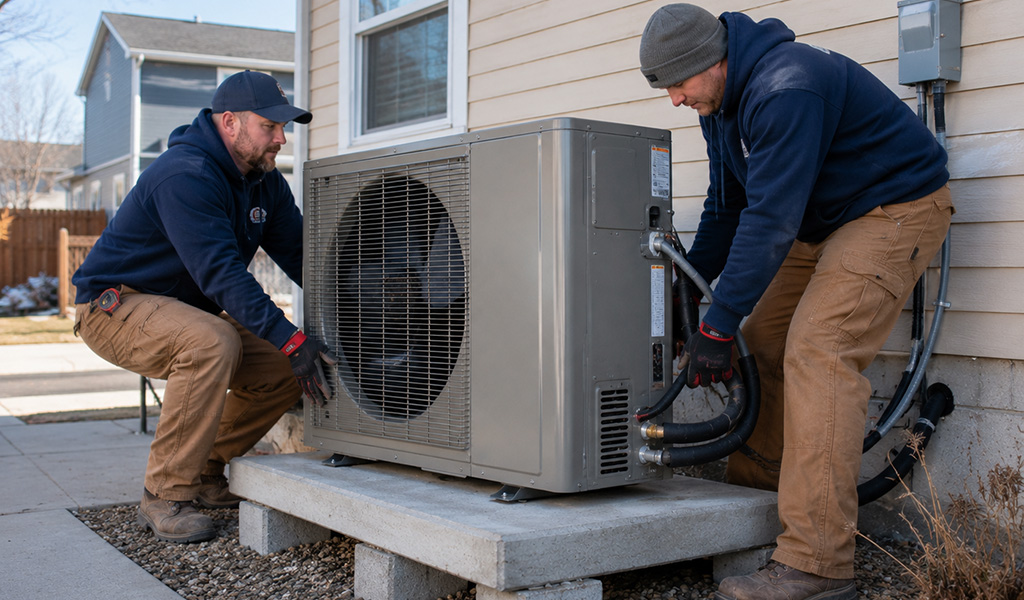
Installation and refrigerant commissioning. The outdoor unit is set on a concrete or composite pad, refrigerant line sets are run, electrical connections are made, and the air handler or coil is connected to your duct system. A quality installation includes proper verification of the refrigerant charge and accounting for line set length and ambient conditions — altitude affects refrigerant behavior at 5,280 feet, and that matters for both performance and efficiency. New installations must also use modern low-GWP refrigerants per the current code.
Thermostat and controls. Heat pumps work best with thermostats designed for two-stage compressors or variable-speed operation. If you’re upgrading from a conventional furnace thermostat, a smart thermostat compatible with your new system is typically part of the installation scope.
Heat Pump vs. Gas Furnace: When to Replace and When to Add On
If your gas furnace is approaching or has already passed 15–18 years, the conversation about a heat pump becomes more urgent. You’re going to be replacing it regardless — the question is what you replace it with.
A straight furnace replacement is simpler and familiar. If your home has poor insulation, an aging electrical panel, or ducts that would need significant work to support a heat pump, a high-efficiency furnace may be the more practical near-term choice. A well-matched furnace installation on a quality system will serve you reliably for another 15–20 years and continue to reduce your utility bills compared to an older, inefficient unit.
But if your home is reasonably tight, your ducts are in good shape, and you’re planning to stay put for a decade or more, the case for adding a heat pump is stronger than it’s ever been. The efficiency gains during shoulder seasons are real and measurable, the incentives are substantial, and the technology has matured. Switching to a heat pump — or a dual-fuel setup — is no longer an experimental choice for Colorado homeowners. It’s a mainstream one.
For landlords managing residential rentals in the Denver area, heat pumps combine heating and cooling into a single efficient system, simplifying service coordination and potentially reducing the frequency of long-term repairs. For commercial property owners, the right path depends on the building’s existing mechanical infrastructure — our commercial HVAC team can evaluate that on a case-by-case basis.
If your current furnace still has years of reliable life left, a furnace repair may be the smarter short-term call while you plan a longer-term upgrade. If it’s nearing the end of life, putting more money into it rarely makes sense. Our technicians will give you an honest read — not a pitch to replace something that has good life left in it.
Choosing a Heat Pump Installation Company in Denver: What Actually Matters
Colorado requires HVAC contractors to hold a state mechanical contractor license. Verify it. Beyond that baseline, a few things separate a quality installation from a costly mistake.
NATE certification. The North American Technician Excellence certification is the industry’s most recognized credential for HVAC technicians. NATE-certified technicians have demonstrated knowledge of refrigeration, heat pump operation, and system diagnostics through third-party testing. All of JD’s HVAC technicians are NATE-certified — not because it’s a marketing checkbox, but because heat pump work requires it.
Two-stage compressor and variable-speed knowledge. A high-efficiency system with a two-stage compressor or fully variable inverter drive is only as good as the technician commissioning it. Improper setup of staging logic, balance points, and thermostat configuration will undermine performance regardless of equipment quality. Ask your installer how they commission these systems — the answer tells you a lot.
Transparent pricing. Cost should be measured and quoted before work begins, not discovered during or after. If a company can’t give you a flat-rate price on a heat pump installation, that’s a signal worth taking seriously.
Warranty terms. Manufacturer equipment warranties are standard. What matters equally is the contractor’s labor warranty. JD’s backs every heat pump installation with a 12-year parts and labor warranty on all components, which is not standard in this industry and reflects genuine confidence in the work we do.
Refrigerant certification. Federal law requires EPA Section 608 certification for technicians handling refrigerants. This is a legal requirement and a basic signal of professionalism — confirm it before any work starts.
For our full heat pump installation and service capabilities, including current availability and the brands we install, reach out directly.
Heat Pump Installation Across the Denver Metro From Longmont to Littleton
JD’s Plumbing, Heating and Air Conditioning has been installing and servicing heat pumps across the Denver area since 2007. We serve Federal Heights, Northglenn, Westminster, Thornton, Arvada, Broomfield, Commerce City, Brighton, Longmont, Aurora, Lakewood, Englewood, Littleton, and the communities in between. Whether you’re a homeowner evaluating a system replacement, a landlord assessing operating costs across multiple properties, or a commercial property owner planning a mechanical upgrade, we give you a straight answer and a price you can count on.
Call us at (720) 735-9170 or schedule a heat pump assessment online. We’ll tell you exactly what your home needs — and what it doesn’t.
Frequently Asked Questions
How much does heat pump installation cost in Denver?
Installed costs for a residential heat pump in the Denver Metro typically range from $5,500 to $12,000 for an air-source system, or $8,000 to $15,000+ for a dual-fuel setup. Several factors affect where your project lands in that range: system size, ductwork condition, electrical panel capacity, and equipment tier. Xcel Energy offers rebates of $2,250 per heating ton for cold climate heat pumps, plus up to $1,000 from the state, and the federal 25C tax credit can offset up to $2,000 more. Most customers in the Denver area save up to $9,500 by combining available incentives.
Do cold-climate heat pumps work in Colorado winters?
Yes. Modern cold-climate heat pumps with variable-speed inverter compressors are designed to operate efficiently in temperatures as low as -15°F — well below Denver’s typical winter lows. Denver’s dry Front Range air also reduces coil frosting, a common issue in humid climates. For the coldest stretches, many Colorado homeowners opt for dual-fuel systems that pair a heat pump with a gas furnace as a backup, getting the best efficiency in moderate weather and reliable warm air when it’s truly cold.
What’s the difference between a dual-fuel heat pump and a standard air-source heat pump?
A standard air-source heat pump provides all heating and cooling electrically by transferring heat between the indoor and outdoor air. In heating mode, it extracts warmth from outside air; in cooling mode, it pushes heat out. A dual-fuel system adds a gas furnace as a backup: the heat pump runs during mild and moderate cold weather — covering the majority of heating hours — and the furnace kicks in automatically when temperatures drop below the system’s balance point, where gas heat becomes more cost-effective.
Will I need an electrical panel upgrade for a heat pump in Denver?
Possibly. Heat pumps generally require a dedicated 240V circuit, and many Denver Metro homes built before the 1980s have 100-amp service panels that aren’t adequate for a heat pump plus existing electrical loads. A pre-installation site assessment will identify whether an upgrade is needed. If it is, budget an additional $1,500–$3,500 depending on scope.
Does JD’s Plumbing offer heat pump installation across the entire Denver Metro?
Yes. JD’s serves the full Denver area from Longmont to Littleton, including Federal Heights, Northglenn, Westminster, Thornton, Arvada, Broomfield, Brighton, Aurora, Lakewood, Englewood, and surrounding Front Range communities. Call (720) 735-9170 or visit jdsplumbingservice.com to schedule an assessment.
