



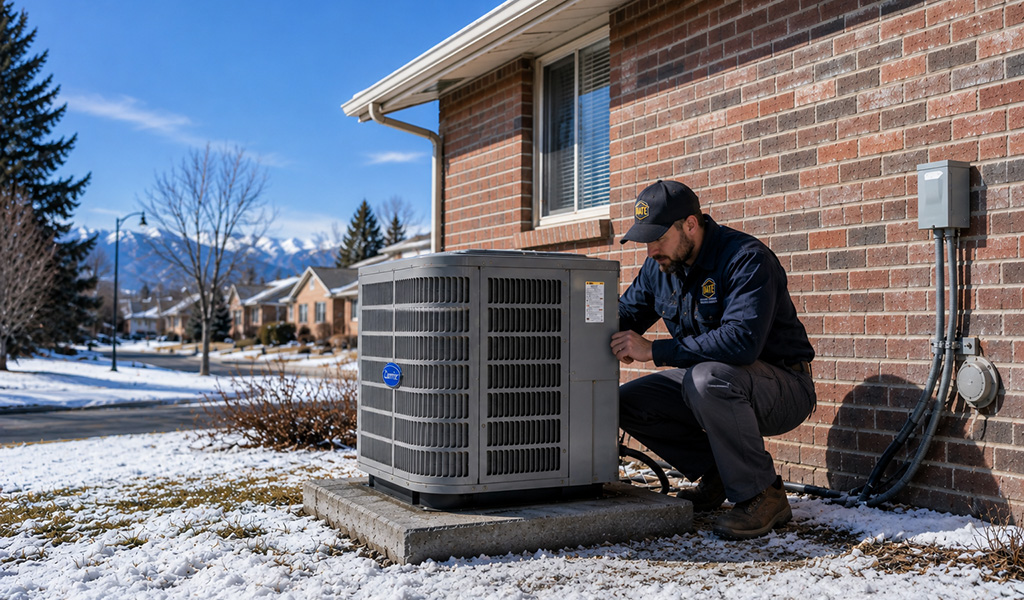
If your cooling system is aging out or you’re building new, you’ll face this question: Should you install a heat pump or stick with a traditional central air conditioner? It sounds like a straightforward comparison until you start digging into efficiency ratings, fuel costs, tax credits, and what actually performs reliably when Denver hits -10°F in February and 100°F in July. This Heat Pump vs. Central AC guide cuts through the noise and gives you a straight answer — one based on what we see in the field every day across the Denver Metro, from Longmont to Littleton and everywhere in between.
Table of Contents
Two Systems, One Decision: What You’re Really Choosing Between
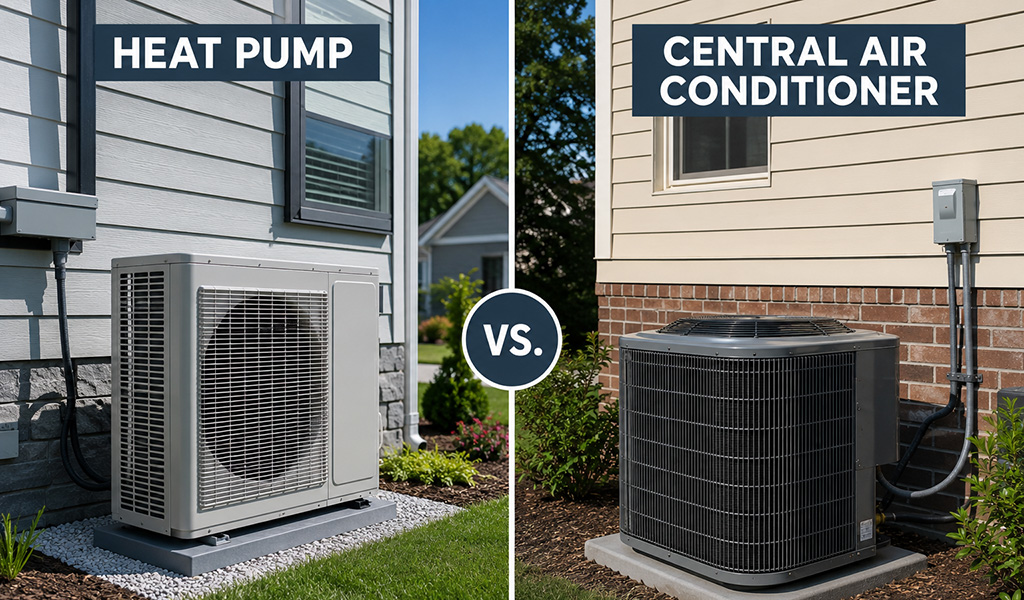
A central air conditioner does one thing: it removes heat from inside your home and dumps it outside, cooling your living space in the process. It runs on electricity, connects to your existing ductwork, and relies on a separate furnace — typically gas-fired — to handle heating. Most Denver homes with forced-air systems have this setup.
A heat pump does the same thing in summer. In cooling mode, both heat pumps and air conditioners cool a home the same way — through a refrigeration cycle where refrigerant absorbs heat from your indoor air, moves it to the outdoor unit, and releases it outside.
Your indoor air handler pushes the cooled air through the ductwork. The difference is what happens in winter: instead of shutting down and handing off to a furnace, a heat pump uses a reversing valve to reverse the refrigerant flow, pulling heat from the outside air — even cold outside air — and moving it indoors. One system handles both seasons. That dual function is the core of the heat pump argument, and it’s also where a lot of the confusion starts.
The decision isn’t really “which cooling system is better.” It’s “Does it make sense to replace your heating and cooling infrastructure at the same time, or just upgrade the cooling side?” That framing matters because it changes the math completely.
How Denver’s Climate Changes the Equation
Denver’s climate is unusual in ways that directly affect this decision. You’re at 5,280 feet, which means lower air density and a refrigerant cycle that behaves differently than it does at sea level. You get genuine four-season weather — not the mild winters of the Pacific Coast, not the crushing humidity of the Gulf South. You get deep cold snaps, intense hail seasons, UV exposure that degrades outdoor equipment faster than most regions, and summer afternoons that can push past 100°F.
The old knock on heat pumps was always about cold-weather performance. Early-generation equipment rapidly lost efficiency once outdoor temperatures dropped below 35–40°F, making it a poor fit for climates with real winters. That criticism was valid twenty years ago. It’s largely outdated today.
Modern cold-climate heat pumps — units from manufacturers like Carrier, Mitsubishi, and Bosch — use variable-speed compressors and advanced refrigerant blends that maintain efficient operation down to 0°F and sometimes lower. Some cold-climate models are rated to deliver heat down to -20°F. The Northeast Energy Efficiency Partnerships (NEEP) has tracked cold-climate heat pump performance across harsh northern climates, and the data support what we’re seeing in the field: a properly sized cold-climate unit can handle the majority of Denver’s heating load through most of the winter without backup.
That said, Denver’s deepest cold snaps — the weeks in January and February where overnight lows dip well below zero — still push heat pumps toward their limits. When outdoor temperatures drop that far, efficiency falls off, and a backup heat source earns its keep. This is where the sizing and equipment selection conversation matters, and it’s why you shouldn’t let anyone install a heat pump without doing a proper Manual J load calculation first.
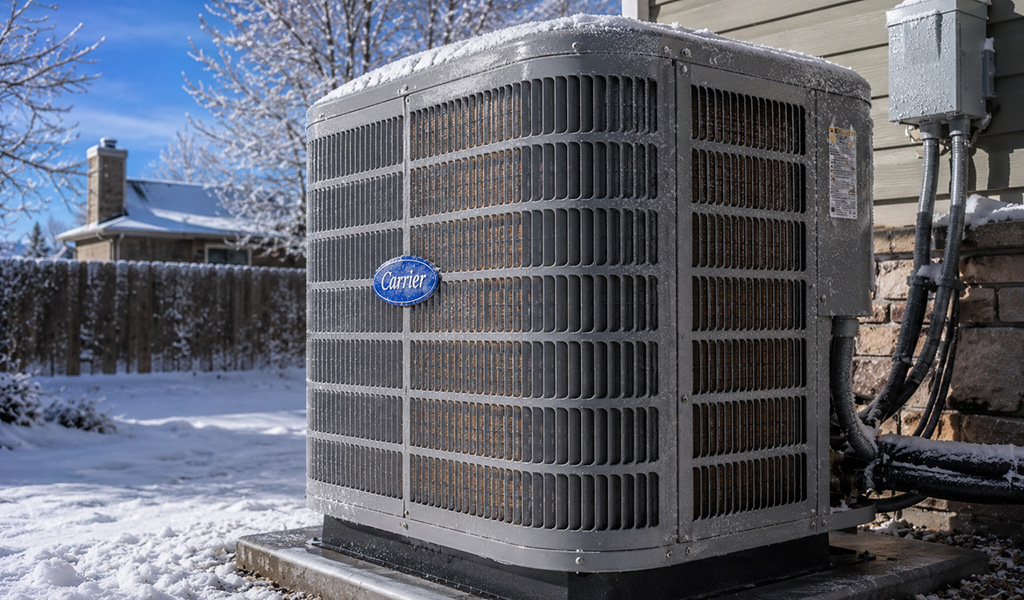
The Cost Comparison Heat Pump vs. Central AC Upfront, Operating, and Long-Term
Let’s talk numbers, because this is where most homeowners get lost in marketing claims.
Typically, both heat pumps and air conditioners cost $3,000 to $15,000 installed, depending on unit size, efficiency, and installation costs. But those ranges aren’t always comparing the same scope of work.
A standard central AC replacement in the Denver Metro — assuming your furnace is in good shape, and your ductwork is serviceable — typically runs from $4,000 to $8,000, depending on the home’s size, the equipment’s efficiency tier, and any ductwork modifications needed. You’re replacing one component of a two-part system.
A heat pump installation is a bigger project. If you’re replacing both your AC and your furnace with a heat pump, you’re looking at $8,000 to $18,000 or more, depending on home size, equipment brand, and whether any electrical panel upgrades are needed. Modern heat pumps run on electricity, and older Denver-area homes — especially the ranch-style construction common in Federal Heights, Northglenn, and Westminster — sometimes have 100-amp panels that need upgrading to properly support a heat pump.
The operating cost picture is more nuanced. Heat pumps are significantly more energy efficient than gas furnaces at moderate temperatures — a quality unit delivers two to three units of heat energy for every one unit of electricity consumed, because it transfers heat rather than generates it. Lower energy consumption means a lower electric bill over time, but the actual savings depend heavily on local utility rates. In Colorado, Xcel Energy supplies both natural gas and electricity to most of the Denver Metro, and natural gas has historically been cheaper per BTU than electricity in this region. That gap has been narrowing, and it shifts further when you factor in incentives.
Right now, the federal Inflation Reduction Act’s 25C tax credit covers 30% of heat pump installation costs, up to $2,000 per year. Energy Star’s rebate finder can help you confirm what you qualify for. Xcel Energy also offers heat pump rebates on qualifying installations through its energy efficiency programs. Stack the federal credit with the Xcel rebate, and the effective upfront cost of a heat pump drops meaningfully — sometimes enough to close the gap with a conventional AC replacement when you factor in long-term energy savings.
If you want flat-rate pricing with no surprises mid-project, that’s something we’re built around at JD’s. Call us at (720) 735-9170, and we’ll walk through the numbers specific to your home.

Heat Pumps in Denver: What’s Changed in the Last Five Years
The efficiency rating system for heat pumps changed in 2023. You’ll now see SEER2 (Seasonal Energy Efficiency Ratio, revised testing standards) for cooling performance and HSPF2 (Heating Seasonal Performance Factor, revised) for heating. The revised ratings use more realistic testing conditions than the old standards, so a SEER2 rating isn’t directly comparable to a legacy SEER rating — the number will look lower even if the equipment is equivalent or better.
For Denver specifically, look for a unit with a SEER2 rating of at least 15 for cooling efficiency and an HSPF2 of 8 or higher for heating. Heat pump efficiency is genuinely strong in moderate climates and across Denver’s long shoulder seasons — those spring and fall days when outdoor temperatures drop into the 30s and 40s are exactly when an air-source heat pump beats a gas furnace on both efficiency and heating costs. The advantage shrinks at extremely cold temperatures, but modern cold-climate units maintain meaningful performance well below freezing. AHRI maintains a certified equipment directory where you can independently verify manufacturer ratings.
One option that does not get enough attention in Denver is the dual-fuel system, a heat pump paired with a gas furnace as a backup. The heat pump handles both heating and cooling through most of the year, operating efficiently during the cooling season and through moderate winter temperatures. When outdoor temperatures fall below the heat pump’s efficient range — typically somewhere between 25°F and 35°F, depending on the unit — the gas furnace kicks in automatically. You get the energy efficiency advantages of a heat pump for most of the year, plus the reliable backup of gas during the coldest stretches. For many Denver homeowners, this is the most practical path to electrification without betting everything on a single system.
Our Denver heat pump installation and service team can walk you through which configuration makes sense for your home’s size, existing equipment, and heating load.
When Central AC Still Makes More Sense
A heat pump isn’t always the right call, and we’ll tell you that directly — even though we install both.
If your gas furnace is five years old and functioning well, replacing it as part of a heat pump installation doesn’t make financial sense. The smart move is a straight AC replacement — get a high-efficiency central air conditioner on a SEER2-compliant platform and let your furnace run until it’s actually time to replace it. Then revisit the heat pump conversation. Central AC systems are more suited for situations where a solid gas heating system is already in place, just as heat pumps perform best as a full replacement when both the heating and cooling sides of the HVAC system need updating at the same time.
For landlords managing multiple properties across the Denver Metro, budget predictability often matters more than long-term energy optimization. A central AC replacement has a lower upfront cost and simpler maintenance profile, which makes it easier to plan across a portfolio. Gas furnaces are also easier for tenants to understand, and service calls are typically more straightforward.
Commercial property owners face a different calculation. Larger commercial buildings often have rooftop units, chillers, or variable refrigerant flow systems that make a simple heat-pump-or-AC comparison irrelevant. If you’re managing a commercial building in the Westminster or Thornton corridor, the conversation starts with a load assessment and a look at your existing mechanical infrastructure — not a residential product comparison.
What to Expect from Installation: Heat Pump vs. Central AC
Whether you go with a heat pump or a central AC, installation follows a similar sequence. A licensed contractor will pull permits with the local jurisdiction, remove and properly recover the existing refrigerant (EPA Section 608 certification is required for any technician handling refrigerants), install the new equipment, commission the system, and verify performance before leaving.
What separates a good installation from a bad one isn’t the brand of equipment — it’s the quality of the system design. An oversized heat pump or AC unit for your home will short-cycle, fail to dehumidify properly, and wear out faster. Undersizing leaves you with a system that runs constantly and still can’t keep up on the hottest days. A proper Manual J load calculation — not a rule-of-thumb tonnage estimate — is how you avoid both problems. Ask any contractor you’re considering whether they perform a load calculation before recommending equipment. If they hesitate, that’s your answer.
Ask about certifications, too. NATE certification — North American Technician Excellence — is the industry standard for HVAC technicians and requires passing rigorous technical exams. Our technicians hold NATE certification, and we back every installation with a 12-year parts-and-labor warranty on all components. That warranty isn’t a marketing footnote — it reflects how we size and install equipment and what we think about the long-term relationship with every customer we serve.
Regular AC maintenance after installation — annual tune-ups for central AC units each spring before the cooling season begins, and twice-yearly service for heat pumps in both spring and fall — is what keeps either system performing at the efficiency level you paid for. Air filters should be changed every 30 to 90 days, and the outdoor unit should be kept clear of debris year-round. Skipping maintenance is how a quality unit becomes an underperforming one within five years.
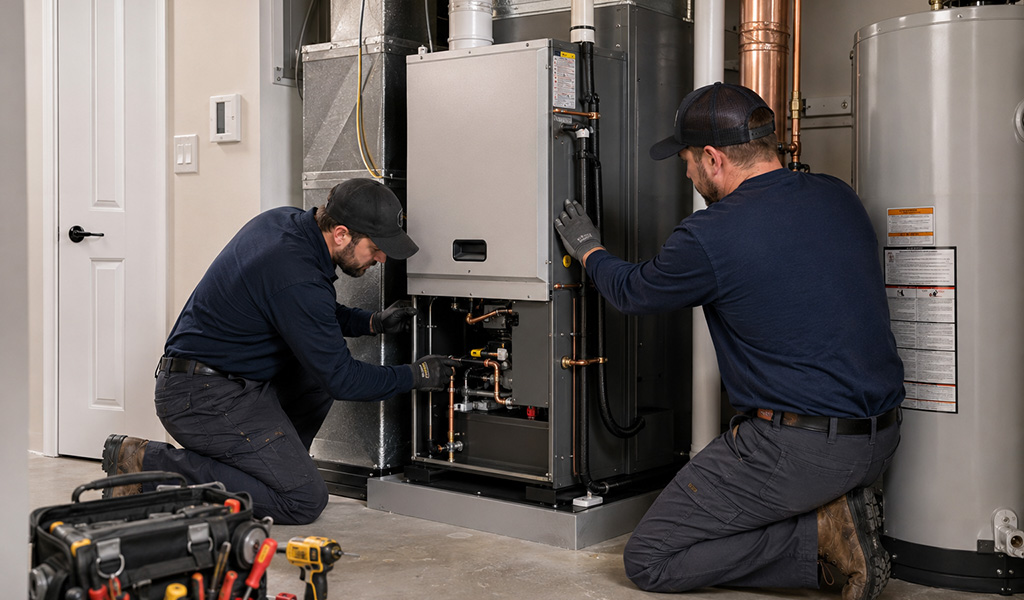
For homeowners thinking about indoor air quality alongside a new system, we also offer air purification solutions that integrate with both heat pump and central AC installations — worth a conversation if anyone in your household has allergies or respiratory concerns.
If you have questions about your current system or want a straightforward assessment of whether a heat pump or central AC makes more sense for your home or property, reach out to our team directly. We serve the full Denver Metro — Federal Heights, Northglenn, Westminster, Thornton, Arvada, and beyond. Call (720) 735-9170 or visit jdsplumbingservice.com to schedule a consultation.
FAQ: Heat Pump vs. Central AC
Can a heat pump handle Denver winters without a backup furnace?
A modern cold-climate heat pump can efficiently handle most of Denver’s winter heating load. Some cold-climate models are rated to deliver heat down to -20°F, well beyond what Denver’s typical winter throws at them. However, during Denver’s deepest cold snaps — nights that dip well into negative temperatures — a backup heat source adds reliability. Many Denver homeowners opt for a dual-fuel system that pairs a heat pump with a gas furnace as a backup, capturing efficiency gains for most of the season while keeping gas as a fail-safe for the coldest stretches.
What’s the difference in cost between a heat pump and a central air conditioner?
The cost of installing a heat pump is generally higher than that of a central air conditioning system, primarily because the heat pump provides both heating and cooling. Typically, both heat pumps and air conditioners can cost anywhere from $3,000 to $15,000 installed, depending on factors such as unit size, efficiency, and installation expenses. In the Denver Metro, a straight central AC replacement usually runs $4,000 to $8,000, while a full heat pump installation runs $8,000 to $18,000 or more.
Is a heat pump worth it if I already have a working gas furnace?
If your furnace is relatively new and in good condition, replacing it as part of a heat pump installation usually doesn’t pencil out financially. The better move is to replace just the central AC and revisit the full system when your furnace reaches the end of its life. At that point, a heat pump installation makes more sense because you’re replacing equipment anyway.
How long do heat pumps and air conditioners last?
A central air conditioning unit typically lasts about 15 years. A heat pump generally has a lifespan of 12 to 15 years due to its year-round operation for both heating and cooling, which increases wear and tear compared to a cooling-only system. Regular maintenance can prolong the lifespan of both—with recommendations to service heat pumps twice a year and air conditioners once a year, each spring before the cooling season begins.
What tax credits and rebates are available for heat pumps in Colorado?
The federal 25C tax credit covers 30% of heat pump installation costs, up to $2,000 per year. Xcel Energy also offers heat pump rebates on qualifying equipment through its efficiency programs. Stack both, and the effective upfront cost of an electric heat pump system drops considerably. Confirm current availability directly with Xcel or through the Energy Star rebate finder before making your decision.
