



The gas vs. electric water heater decision used to come down to one question: do you have a gas line? In the Denver Metro today, a third option is on the table, and current rebates reward it, so the answer takes a little more thought.
Here’s the short version. If your property already has natural gas, a gas tank water heater still costs less to run than a standard electric tank and recovers hot water roughly twice as fast. That’s because natural gas usually costs less per unit of heat than electricity, here and in most regions. A standard electric tank costs less to install but more every month. A heat pump water heater, the electric option most comparisons skip, uses far less energy than either and is the only type with meaningful rebates attached right now. In most cases, the right choice comes down to how much hot water your household or building actually uses.
Our licensed plumbers have handled water heater repair and installation across the Front Range since 2007, from ranch homes in Northglenn to apartment buildings in Arvada and restaurants in Westminster. This guide compares options for homeowners, landlords, and commercial property owners from Longmont to Littleton, and shows where Colorado conditions change the math.
Table of Contents: Gas vs. Electric Water Heater
How Gas, Electric, and Heat Pump Water Heaters Make Hot Water
All three tank styles store 40 to 80 gallons of hot water. They share the same core parts: a dip tube, an anode rod, a drain valve, and a temperature-and-pressure relief valve. Our breakdown of how hot water heaters work covers the full anatomy. What differs is how heat gets into the water.
Gas Tank Water Heaters
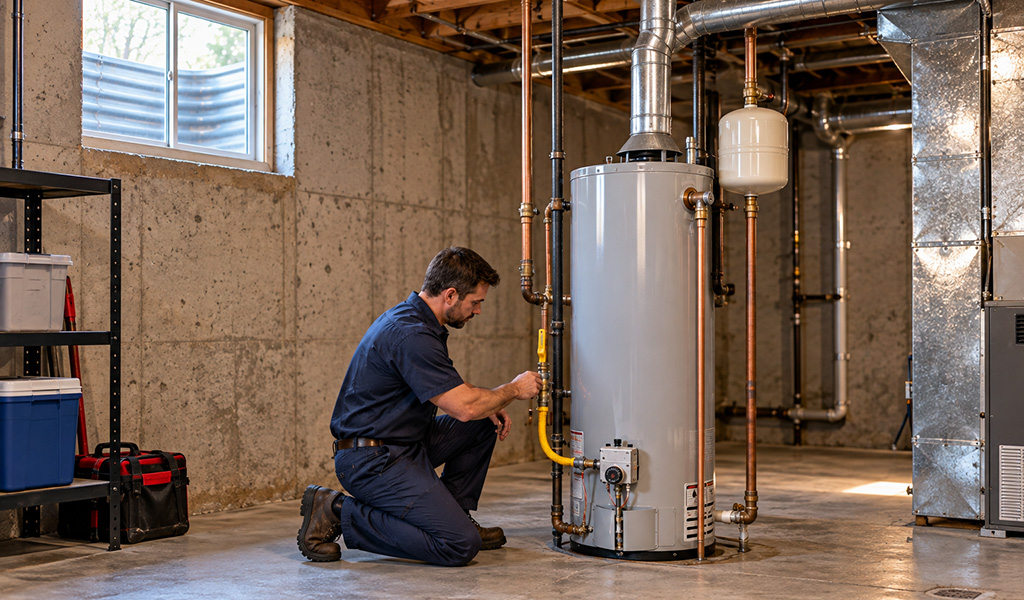
A burner under the tank heats the water. Combustion gases rise through a flue in the center of the tank and exit through a vent. Every gas unit needs that vent to carry combustion gases safely outside, which is part of why gas installation is generally more complex than electric.
Because the burner quickly transfers heat to the stored water, gas units heat water much faster than electric models and deliver strong recovery after a long shower or a load of laundry.
Most residential models use a standing pilot, which means they keep making hot water during a power outage. Power-vent models rely on an electric fan and won’t.
Electric Resistance Water Heaters
These use two heating elements on a dedicated 240-volt circuit. They turn nearly all the electricity they draw into heat, so on paper they’re close to 100% efficient.
Electric storage units are typically the least expensive equipment to buy and install, since they require no gas connection or venting. The difference shows up later. In Xcel territory, electricity costs more per unit of heat than natural gas does.
Electric heat pumps also heat water slowly, so a standard electric tank recovers at roughly half the rate of a comparable gas unit. Drain one completely, and you’ll wait well over an hour for a full tank. Electric water heaters also can’t operate at all during a power outage.
Heat Pump (Hybrid) Water Heaters
A heat pump water heater works like a refrigerator in reverse. A small compressor pulls heat from the surrounding air and moves it into the tank. According to ENERGY STAR’s heat pump water heater guidance, certified units use 70% less energy than a standard electric water heater. That can save a household of four around $550 a year.
These units also carry backup resistance elements for high-demand periods, which is where the “hybrid” label comes from.

Gas vs. Electric Water Heater vs. Heat Pump: Side-by-Side Comparison
Gas Tank | Electric Resistance | Heat Pump (Hybrid) | |
|---|---|---|---|
Upfront cost | Moderate | Lowest | Highest |
Monthly operating cost | Low | Highest | Lowest |
Recovery speed | Fast | Slow | Slow to moderate |
Venting | Required | Not required | Not required (needs air space and a condensate drain) |
Works in a power outage | Yes, with a standing pilot | No | No |
Combustion or CO risk | Yes | No | No |
Current utility rebates | Minimal | None | Yes |
Installed pricing depends on your venting, electrical service, and the access around the old unit. Our guide to what a water heater costs in Denver breaks down current ranges by type.
Which Type Is the Most Energy Efficient?
Efficiency and operating cost aren’t the same thing, and that difference trips up a lot of buyers.
A standard electric resistance unit converts nearly 100% of its energy into heat, but that energy is expensive. A gas tank loses some heat up the flue, yet natural gas costs less per unit, so gas generally wins on monthly bills against standard electric.
A heat pump water heater uses roughly 30% as much energy as a standard electric system. That’s why a correctly sized heat pump offers the best energy efficiency of any tank-style option. Gas hot water systems can end up costing more to run than a heat pump, even though they beat standard electric.
Solar hot water systems also perform well on properties with strong, unshaded sun exposure, and Colorado gets plenty. They typically pair with a backup heater, though, and remain an uncommon retrofit in metro homes.
Front Range Factors That Change the Math
Most comparison articles assume sea level and soft water. Here’s what’s different about water heaters in the Denver Metro.
Altitude Reduces Gas Burner Output
At 5,000-plus feet, every cubic foot of air holds less oxygen, and gas appliances lose rated output. Trade coverage of high-altitude gas appliance derating describes a common rule of about 4% per 1,000 feet of elevation. Depending on the appliance and the method, a burner here can deliver noticeably less heat than its sea-level rating.
In a water heater, that shows up as slower recovery than the box promises. It doesn’t make gas the wrong choice. It does mean sizing matters more here, and the unit has to be rated and set up for your elevation.
Cold Winter Supply Water
Front Range tap water arrives cold in winter, so your water heater has to raise every gallon more degrees in January than in July. That extra temperature rise is when an undersized electric tank runs out mid-shower or halfway through filling a bath.
Cranking up the tank temp to compensate isn’t the fix. It raises scald risk and speeds up scale. Proper sizing is the fix: if you’re going electric or heat pump in a busy household, go up a size.
Hard Water Fails Each Type Differently
Much of the metro’s municipal water ranges from moderately hard to hard, and minerals attack each type in a different place:
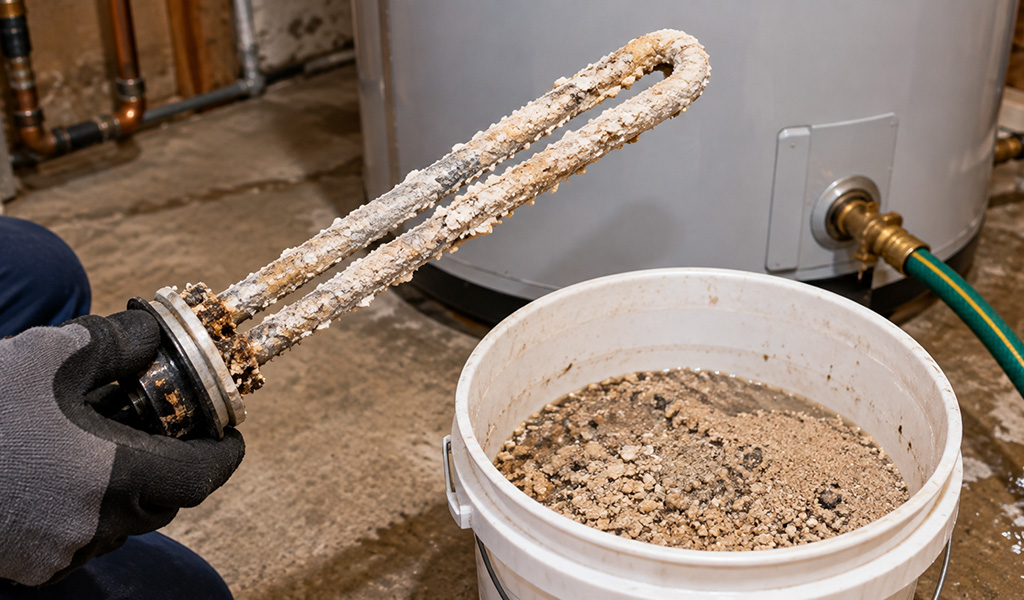
- Gas tanks: Sand-like sediment settles and sits on the tank bottom, directly over the burner, insulating the water from the flame. You hear it as popping and rumbling. It costs efficiency first and eventually the tank itself.
- Electric tanks: Scale builds right on the elements until they burn out. The upside is that elements are inexpensive to replace.
- Heat pump units: These share the same element exposure as electric tanks.
Annual flushing helps all three. In harder-water pockets, a whole-home water softener can add years to whichever heater you install.
Older Homes: 100-Amp Panels and Orphaned Flues
We constantly run into two issues in 1960s and ’70s ranch homes across Federal Heights, Thornton, and Westminster.
The first is electrical capacity. Many of these older homes still run 100-amp panels with no room for a new 240-volt water heater circuit, so switching to electric can mean electrical work well beyond a single circuit, including a panel upgrade.
The second is venting. When you replace the original furnace with a high-efficiency model that vents through PVC, the gas water heater is left on a chimney sized for two appliances. An “orphaned” water heater on an oversized flue may not draft properly, which can push combustion gases back into the house. Any furnace installation in a home with a gas water heater should include a venting check.

Switching from Gas to Electric, or Electric to Gas
Gas to Electric or Heat Pump
The plumbing side is straightforward. The heavier lift is electrical work: a dedicated circuit, sometimes a panel upgrade, and properly capping the old gas line.
Heat pump models add placement requirements. They need a generous volume of surrounding air (many manufacturers specify about 700 cubic feet), a condensate drain, and a space that stays reasonably warm, ideally inside the home’s heated space. An unfinished basement or ground-floor utility room works well, and the unit cools and dehumidifies the room as a bonus in summer.
An uninsulated garage is a poor fit in a Colorado winter. Once the surrounding air gets cold, most units fall back on their resistance elements, and you lose the efficiency you paid for.
Incentives narrow the upfront gap:
- Xcel Energy: As of October 1, 2026, Xcel Energy’s Colorado rebate program pays $1,500 for an ENERGY STAR certified heat pump water heater that replaces a gas or propane unit. That’s down from $2,250 earlier in the year.
- State of Colorado: The state heat pump credit adds $250, delivered through a registered contractor.
- Federal: The federal tax credit for heat pump water heaters ended December 31, 2025.
Rebate programs change often, so confirm current amounts before you buy. If you’re also weighing a heat pump for heating and cooling, doing both projects together can stack incentives.
Electric to Gas
This direction usually costs more up front and can require retrofitting existing infrastructure. You need a gas pipe sized for the heater’s BTU load, a proper vent or a power-vent unit, adequate combustion air, and a permit. If gas already serves your furnace or range, a licensed tech can tell you quickly whether a gas line extension is practical. The payoff is faster recovery and lower operating cost for the life of the heater.
Where Tankless Water Heaters Fit
Tankless water heaters skip stored water entirely and heat water as it passes through the unit.
A gas tankless system needs a larger gas connection and dedicated venting. An electric tankless unit can demand more amperage than many older panels can supply, so whole-house electric tankless is rarely practical in North Denver ranch homes.
Flow rate, not tank size, is the limiting factor. Run two showers and the dishwasher at once, and an undersized unit falls behind. Small electric point-of-use units do work well under a sink far from the main heater.
Our tankless vs. traditional water heater comparison covers the full decision. Our guide to sizing a tankless water heater walks through the flow rate math.
What Landlords Should Weigh
For rental properties, who pays the utility bill changes the answer, and you have to balance upfront cost against tenant satisfaction and turnover.
If tenants pay utilities, an electric resistance tank saves you money at installation but leaves them with the highest operating cost. It’s a common source of complaints about utility bills and short showers. Gas recovers fast enough to handle back-to-back showers in a family unit.
Electric and heat pump units remove combustion from the equation. With gas, Colorado requires carbon monoxide alarms in homes with fuel-burning appliances, so a gas water heater means keeping those alarms working and the venting in good shape.
Heat pumps lower tenant bills but cost more up front and need the right space. They make the most sense in units with a basement mechanical room.
Commercial Properties and Denver’s Electrification Rules
Restaurants, salons, laundromats, and multifamily buildings live and die on recovery rate. That’s why high-input gas units and multi-heater systems dominate commercial water heating, and why commercial equipment selection typically starts with peak demand.
Inside the City and County of Denver, however, code now shapes the decision. Under Denver’s electrification permitting requirements for gas equipment replacements, replacing a gas water heater in an existing commercial or multifamily building takes extra permit documentation showing that electric alternatives were evaluated. In some cases, the code requires electric equipment outright. Denver has updated these rules several times since they took effect, so confirm current requirements with the city before you plan a replacement. A failed commercial water heater is a bad time to discover your permit needs additional paperwork.
These rules apply to Denver proper. Westminster, Thornton, Arvada, Broomfield, Longmont, and Littleton follow their own adopted codes, so requirements can differ by a few miles. Our commercial plumbing team handles permitting across the metro and can help you plan a replacement before the old unit fails.

Safety: Venting, Gas, and Carbon Monoxide
Gas water heaters are safe when installed and vented correctly, but they’re also the appliance we most often find back-drafting. Warning signs include:
- Scorch marks or melted plastic near the draft hood
- Rust on top of the tank
- Condensation on nearby windows
Professional carbon monoxide testing removes the guesswork. Electric and heat pump units eliminate combustion risk but still need a working relief valve and a properly routed discharge line.
Which Water Heater Should You Choose?
To decide, start with three questions. Do you have a gas connection? How much hot water do you use? Where would the new unit sit?
For most Denver-area homes with gas service and three or more people, a properly sized, altitude-rated gas tank remains the most cost-effective all-around choice.
If you don’t have gas, your panel can handle the load, and you have a basement or utility room with space, a heat pump water heater delivers the lowest operating cost. Current rebates close much of the price gap.
Standard electric tanks fit condos, ADUs, small apartments, and tight budgets with light hot water use.
Commercial buildings inside Denver should plan around heat pump options and the feasibility report well before the existing unit gives out.
For efficiency ratings across every type, see our guide to choosing an energy-efficient water heater.
Get a Straight Answer Before You Buy
The right water heater depends on things a spec sheet can’t see: your venting, your electrical panel, your water quality, and how your household or tenants actually use hot water.
JD’s NATE-certified technicians and licensed residential plumbing team will review your setup before you purchase and tell you honestly which option fits. You get flat-rate pricing at a reasonable cost and a 12-year parts-and-labor warranty on all components. Call (720) 735-9170 or request service online to schedule a visit anywhere from Longmont to Littleton.
FAQ: Gas vs. Electric Water Heater
Is a gas or electric water heater cheaper to run in Colorado?
Among standard tank models, gas is cheaper to run in Xcel territory because natural gas costs less per unit of heat than electricity. A heat pump water heater changes the comparison. Depending on your rates and where it’s installed, it can match or beat gas.
Do gas water heaters need a high-altitude setup in Denver?
Gas appliances lose output at elevation, so the water heater must be rated and configured for your altitude according to the manufacturer’s instructions. A licensed installer should confirm the rating and test combustion and draft at startup.
Can I replace my gas water heater with an electric one?
Yes. You’ll need a dedicated 240-volt circuit, enough panel capacity, and the gas line properly capped. Heat pump models also require adequate air space and a condensate drain.
How long do water heaters last in the Denver area?
Gas water heaters typically last about 8 to 12 years. Electric tanks often reach 10 to 15 years because they have no burner or flue to wear out. Hard water, skipped flushing, and a depleted anode rod shorten either one. Annual maintenance extends both.
Does a heat pump water heater work in a Colorado garage?
It works, but not efficiently in winter. When the garage gets cold, most units switch to their backup resistance elements, which erases much of the savings. A basement or interior utility room is a better location.