



If you’re asking, How Much Does a Water Heater Cost in Denver?, your hot water heater is probably already giving you trouble — or it’s old enough that you’re planning ahead before it fails on you. Either way, the honest answer is: it depends on more in Denver than it does in most cities, and a national average isn’t going to get you close. This water heater cost guide breaks down what actually drives the price in the Denver Metro area — expansive clay soil, hard Front Range water, altitude, and aging suburban housing stock all push the real number in ways generic guides don’t account for.
We’ve replaced and repaired water heaters across Federal Heights, Northglenn, Westminster, Thornton, and Arvada for nearly two decades, and the same questions come up on almost every call: how much is this going to cost, why is it more than what I saw online, and is it even worth fixing? Here’s the real breakdown for 2026.
Table of Contents: How Much Does a Water Heater Cost in Denver?
What Determines Hot Water Heater Cost in Denver: Fuel Type, Tank Size, and More
Several factors decide the actual cost of a new water heater, and they stack on top of each other more than most homeowners expect. Fuel type is the first fork in the road. Gas units cost more upfront than electric but usually recover hot water faster and cost less to run over time in a market where natural gas is cheaper per BTU than electricity. Tank size matters too — a 40-gallon unit serving a two-bedroom home in Thornton is a different project than a 75-gallon commercial-grade tank feeding a rental property with four units, and more capacity generally means a higher price for both the unit and the labor to install it.
Brand tier and tank model also matter; a base-model tank and a high-efficiency condensing model can differ by hundreds of dollars before labor even enters the equation. Location within the home matters more than people assume — a water heater tucked in an easily accessible utility closet costs less to install than one buried in a tight crawlspace or attic, since space constraints slow the job down and increase labor time.
Then there’s what many quotes leave out: code-required upgrades. If your current setup doesn’t have an expansion tank, seismic strapping, or proper venting clearance, a straightforward swap turns into a bring-it-up-to-code job. Older homes throughout the North Denver suburbs were often built before current plumbing code, so this catches more homeowners off guard than you’d think. If you’re not sure what your home actually needs, an on-site look from a licensed tech is worth more than any online calculator — we’re happy to walk through your specific setup and give you a flat-rate number, not a guess.
To learn more, read our Guide: Gas vs. Electric Water Heater.

How Much Does It Cost to Install a Water Heater? Labor Rates and Other Costs
Installation costs are where many online quotes fall apart, because labor cost varies with installation complexity, not just the price tag on the unit itself. Regional labor rates in the Denver Metro area, plus the specifics of your home, determine the actual cost more than the sticker price of the tank you picked out online.
As a general range, national cost-tracking sources report that the average total cost to purchase and install a standard water heater falls between $1,500 and $2,400, with labor for a tank-style installation typically running $150 to $450 on its own. Gas water heater installation costs average around $2,607 nationally, while electric water heater installation tends to run lower, averaging roughly $920 to $1,177.
Tankless systems have a wider labor range—often $600 to $1,900—because they require an added gas line, venting, or electrical work. Most professional installations take about 2 to 6 hours, though that stretches out when a unit is placed in a tight closet, attic, or hard-to-reach crawlspace.
Those figures are national benchmarks, not a Denver-specific quote — the only way to get your actual cost and final price is an on-site evaluation of your fuel type, tank size, and access.
Expansion Tanks, Permits, and Electrical Work
Other costs beyond the unit and base labor typically come from code compliance. Local building codes often require a plumbing or electrical permit and a post-installation inspection, which can add $50 to $200 to the bill; permit fees themselves generally range from $25 to $300 depending on the municipality.
If your Denver home needs an expansion tank added, expect that to factor into the total cost as well — it’s a small part with an outsized role in protecting your plumbing system from pressure buildup. Homes without existing 240-volt service for an electric unit, or without adequate combustion air and clearance for a gas unit, may also need electrical work or venting upgrades to allow safe installation. None of this is optional or upsell — it’s what a licensed inspection finds, and skipping it isn’t worth the risk to your home or your warranty coverage.
We recommend getting multiple quotes only if they’re itemized enough to compare apples to apples; a number with no breakdown of labor, permits, and parts isn’t a real comparison.
Tank Water Heater Costs: Repair, Replacement, and Installation
Most repair calls fall into a handful of categories: a failed thermocouple or igniter on a gas unit, a burned-out heating element on an electric one, a bad thermostat, or a pilot assembly that won’t stay lit. These repairs are typically the least expensive way to get hot water back, often resolved in a single visit.
Anode rod replacement is a smaller but important repair — it’s the sacrificial metal rod that attracts corrosion so your tank doesn’t have to, and Denver’s mineral-heavy water eats through them faster than in many other markets. Standard tanks require annual maintenance to prevent rust, and an anode rod inspection should be part of that check every year, along with a flush to clear out sediment buildup that hard water leaves behind faster here than in softer-water regions.
Full replacement costs scale with size and fuel type. A standard 40-gallon gas tank runs toward the lower end of the replacement spectrum; a 50-gallon or 75-gallon unit, or anything with a higher efficiency rating, pushes the number up.
Electric tanks are typically less expensive to purchase but can carry higher installation costs if your electrical panel needs upgrading to handle the load. Rheem’s residential water heating lineup, for instance, was redesigned with its Endeavor line specifically to meet 2023 Department of Energy efficiency regulations, and units built to that standard generally sit at a higher price point than older-generation models still showing up in outdated online pricing — worth keeping in mind if a number you saw a year or two ago seems low.
As a rule of thumb, once a tank is past the ten-year mark and needs a repair beyond a simple part swap, replacement usually makes more financial sense than sinking more money into an aging unit. If you’re already looking at a second or third repair call within a couple of years, that’s your answer. For a deeper look at how these systems actually work and where they tend to fail first, our breakdown of how hot water heaters work walks through gas and electric models side by side. For the service side, our water heater repair and installation page covers what a same-day visit typically involves.

Tankless Water Heater Costs
Tankless units cost more to install than a comparable tank system, and it’s not just the unit itself. Gas tankless heaters often require a larger gas line to handle the higher BTU demand, plus updated venting — both of which add to the installation bill beyond what a straight tank swap would run. Electric tankless models skip the gas line question but can require an electrical panel upgrade depending on your home’s existing capacity.
Tankless earns back that upfront cost over time. ENERGY STAR certified gas tankless water heaters lower water heating expenses by heating water only when it’s needed, rather than keeping a tank full of hot water on standby around the clock. Energy-efficient models like these can save households over $200 to $300 a year compared to standard electric tanks, and over a 15–20 year lifespan — typically longer than a standard tank — that adds up, especially in a household running multiple showers, laundry, and dishwashing back to back.
Sizing is where a lot of tankless installs go wrong, and it’s worth getting right before you commit to a unit. We’ve written a full guide on how to size a tankless water heater for your household, and a companion piece on what to expect when installing a tankless system that covers venting and gas line considerations in more detail. If you’re weighing tankless against a standard tank replacement, our tankless water heater benefits article lays out the tradeoffs plainly.

Heat Pump, Propane, and Solar Water Heaters: Other Options to Consider
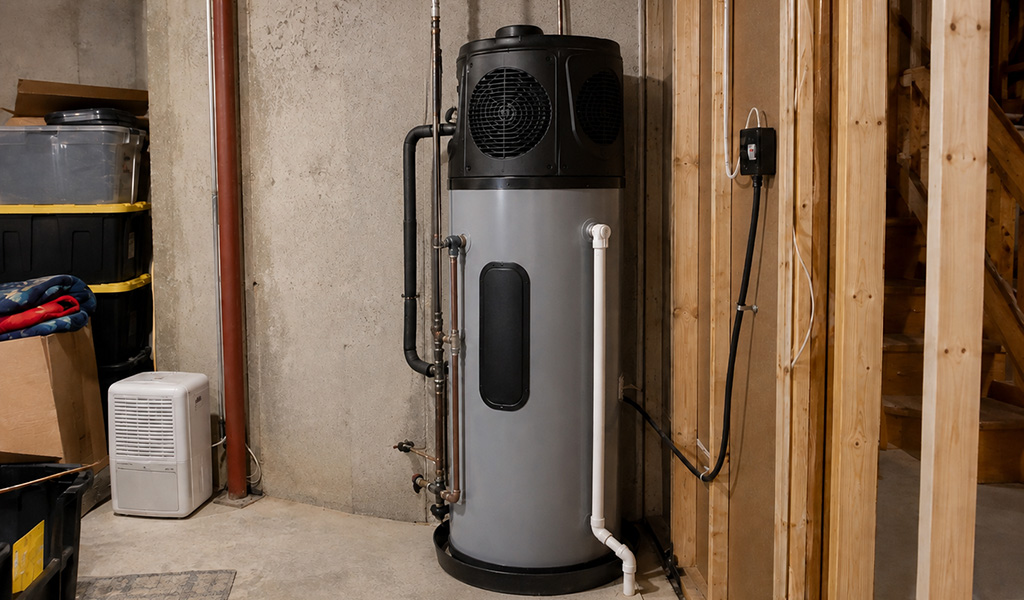
Tank and tankless aren’t the only choices worth knowing about, even if they’re the two most common installs we do across the Denver Metro area. A heat pump water heater pulls warmth from the surrounding air rather than generating heat directly, which makes it one of the most energy-efficient options on the market. Hybrid heat pump water heaters typically have the lowest annual operating costs of any type, though the replacement cost for the unit itself generally runs from about $1,200 to $2,500 before installation. Federal tax credits are often available for qualifying heat pump models, which can offset a meaningful chunk of that upfront cost — worth checking before you rule one out on price alone.
Propane water heaters function similarly to natural gas water heaters and make sense for homes without a natural gas line, though propane typically costs more per unit of energy to operate. Solar water heaters are the least common option we see installed locally, largely due to Colorado’s temperature swings and snow load, but they remain a lower-carbon choice where the site and budget make sense — solar systems generally run $2,000 to $3,000 for the unit before installation.
Why Denver Water Heater Costs Don’t Match the National Average
Three things separate Denver Metro pricing from what you’ll find in a generic cost guide. First, hard water. Front Range municipal water carries more dissolved minerals than water in a lot of other regions, and that mineral buildup accelerates sediment accumulation inside a tank, shortens anode rod life, and can clog tankless heat exchangers faster than manufacturers’ national averages assume. A tank rated for ten years in mild-water regions often needs earlier attention here.
Second, altitude. At Denver’s elevation, gas appliances burn differently than they do at sea level, and manufacturers derate BTU output accordingly. That affects unit sizing and, in some cases, whether an off-the-shelf model from a big-box store is actually rated to perform correctly in your home.
Third, housing stock. A lot of homes across Federal Heights, Northglenn, Westminster, and Arvada were built decades ago, before current plumbing and gas code. A water heater swap in one of these homes frequently surfaces a code item — missing expansion tank, insufficient combustion air, improper venting distance — that a newer home wouldn’t have. It’s not an upsell; it’s what a licensed inspection actually finds, and it’s the kind of detail generic online cost guides skip because they’re not written with Colorado’s building stock in mind.
Commercial and Rental Property Considerations
Commercial properties and multi-unit rentals have different demand curves than single-family homes, which changes both sizing and cost. A property with multiple units or high simultaneous hot water demand often needs a higher-capacity tank, a commercial-grade unit, or multiple smaller systems distributed across the building rather than one central tank trying to keep up.
For landlords, timing matters as much as sizing. Budgeting for replacement before a unit fails — rather than reacting to a mid-tenancy emergency — avoids the higher cost of rush service and the disruption of an unplanned outage for tenants. It’s also worth confirming warranty transferability if you’re buying or selling a property with a relatively new water heater already installed. Our commercial plumbing services page covers what we handle for property managers and commercial accounts across the metro area.
How to Get an Accurate 2026 Quote for Your Home
A number pulled from a website won’t account for your gas line size, your venting setup, your water quality, or whether your home needs a code upgrade during the swap. An accurate quote comes from a technician who actually looks at your existing setup—checking the gas or electrical supply, measuring for code compliance, and confirming what size and type of water heater will perform well in your specific home.
That’s also where flat-rate, itemized pricing matters. A quote that names each line item — unit, labor, any code-required parts, disposal of the old unit — gives you a real total cost to compare, not a placeholder that grows once the work starts. If you’re weighing a rebate-eligible high-efficiency or heat pump model, it’s worth checking current incentives before you decide; Xcel Energy offers rebates on qualifying water heater upgrades for Colorado customers, and those can meaningfully offset the higher upfront cost of an efficient unit.
Every installation at JD’s comes with our 12-year parts and labor warranty, flat-rate pricing with no surprise charges after the final price is set, and licensed, NATE-certified technicians who work on these systems daily throughout Federal Heights and the greater Denver Metro area.
If your water heater is acting up, failing outright, or old enough that you’re wondering whether it’s worth another repair, call us at (720) 735-9170, and we’ll give you a straight answer and a real number—not a national average. You can also reach out directly through our contact page to schedule a free on-site quote.
FAQ: How Much Does a Water Heater Cost in Denver?
How much does it cost to replace a water heater in Denver?
Cost depends on tank size, fuel type, and whether your home needs any code-related upgrades during installation, such as an expansion tank or updated venting. Older homes in the North Denver suburbs more often need these upgrades than newer construction, which is why an on-site quote gives a far more accurate number than an online estimate.
Is it cheaper to repair or replace a water heater?
For a unit under ten years old with a single, isolated issue — like a thermocouple or heating element — repair is usually the more affordable option. Once a tank is past ten years old or needs repeated repairs, replacement typically costs less over time than continuing to patch an aging system.
Why do tankless water heaters cost more upfront?
Installation often requires a larger gas line, updated venting, or an electrical panel upgrade to support the unit’s higher demand, in addition to the cost of the unit itself. That higher install cost is offset over time by lower energy bills and a longer lifespan compared to a standard tank.
Does hard water affect water heater cost or lifespan in Colorado?
Yes. Front Range municipal water carries more dissolved minerals than water in many other regions, which speeds up sediment buildup in tanks and shortens anode rod life. This can mean earlier repairs or replacement than the national average lifespan would suggest.
Do I need a permit to replace a water heater in Denver?
In most cases, yes—especially if the replacement involves changes to gas lines, venting, or electrical connections. A licensed plumber handles permitting as part of the installation, which also protects you if you sell the home later and need proof the work meets code.