



If you’ve ever walked into your home on a sweltering Denver summer afternoon and felt that sinking sensation — the air is warm, the vents are blowing weakly, and something just isn’t right — you already know the anxiety of a struggling air conditioner. In moments like this, many homeowners start asking whether their Central Air Conditioner needs Repair or Maintenance.
Colorado’s climate is deceptive. Mild springs and cool evenings can lull homeowners into skipping scheduled annual maintenance, only to face a full system breakdown when temperatures spike into the 90s in July and August.
So how do you know if your central air conditioner needs repair or maintenance? The answer depends on what it’s doing, how old it is, and how well it’s been cared for. This guide walks you through the most common warning signs, explains the difference between routine maintenance and urgent repairs, and helps you make an informed decision before you’re left sweating through a Colorado heat wave.
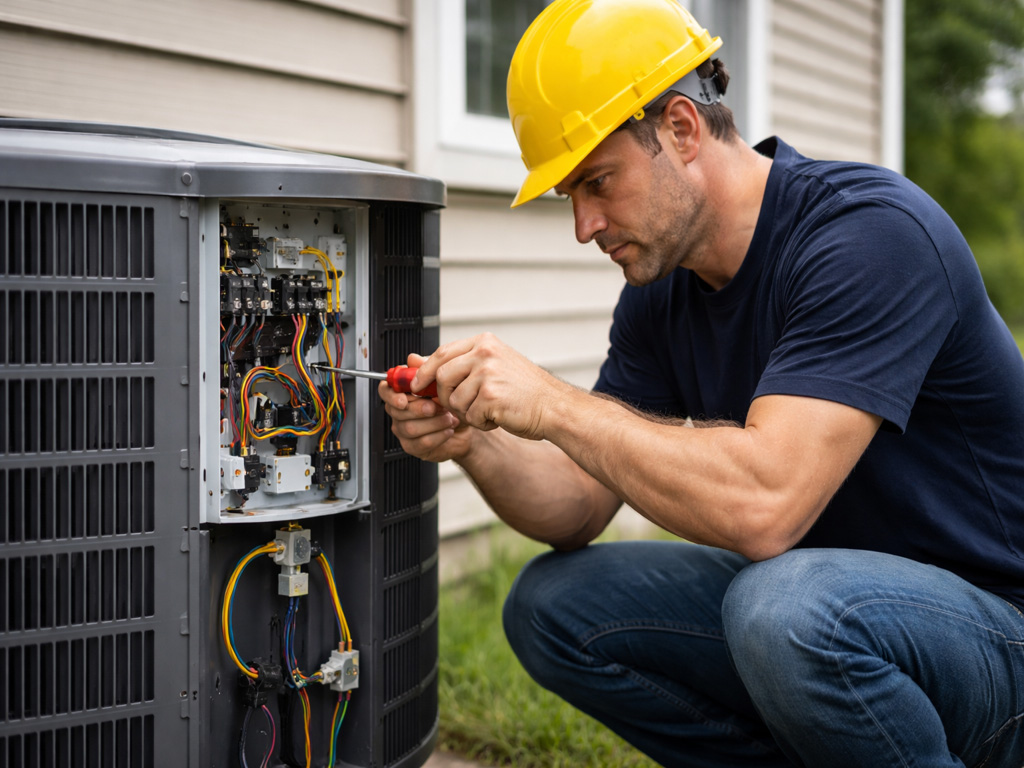
Table of Contents
What’s the Difference Between AC Repair and AC Maintenance?
These two terms are often used interchangeably, but they’re not the same thing — and understanding the difference can save you hundreds of dollars.
AC maintenance is preventive. It’s the annual or semi-annual service performed on a functioning system to keep it running efficiently, extend its lifespan, and catch small issues before they become expensive problems. Think of it like an oil change for your car.
AC repair is reactive. It happens when something has already gone wrong — a failed component, a refrigerant leak, a frozen evaporator coil — and the system is either not working correctly or not working at all. Air conditioning repair is often the most cost-effective or appropriate option when the issue is isolated, repair costs are reasonable, and restoring comfort quickly is a priority.
The smartest approach is to stay ahead of repairs through consistent maintenance. But when warning signs appear, knowing how to read them can help you act quickly and avoid a complete system failure. The decision-making process for homeowners often involves weighing the costs and benefits of repair versus maintenance, considering factors like efficiency, potential savings, and long-term comfort.
Routine Central AC maintenance is one of the best ways to reduce the need for major repairs.
Warning Signs Your Central Air Conditioner Needs Repair
Your AC Is Not Cooling the House
This is the most obvious and urgent sign that something is wrong. If your central air conditioner is running but not cooling your home to the set temperature — or if certain rooms feel significantly warmer than others — you likely have a repair issue rather than a maintenance issue. Warm air coming from vents is a clear warning sign and can indicate issues with the HVAC system.
Common causes of an AC not cooling include:
- Low or leaking refrigerant (Freon or R-410A)
- A dirty or frozen evaporator coil
- A failing compressor
- Blocked or leaking ductwork
- A malfunctioning thermostat
In Denver and the surrounding Front Range, inadequate cooling is particularly problematic during July and August when temperatures regularly exceed 90°F. If your system is struggling to keep up during peak heat, don’t wait — schedule a diagnostic appointment with a licensed HVAC technician as soon as possible.
Your AC Is Making Unusual Noises
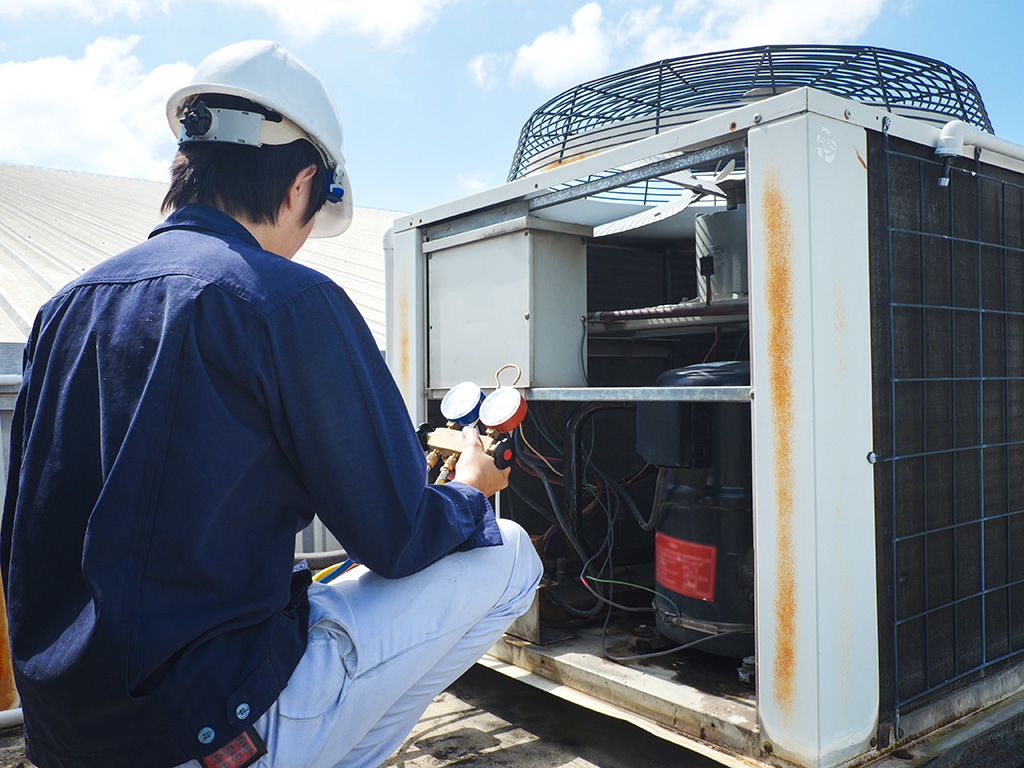
Unusual noises from an air conditioner can indicate loose parts, motor issues, electrical failures, or dirty or frozen coils. A properly functioning central air conditioner should operate with a consistent, relatively quiet hum. If you’re hearing anything outside of that, pay attention. Different sounds point to different problems:
Banging or clanking — a loose or broken component inside the compressor or air handler. This warrants immediate attention, as running the system can cause further damage.
Squealing or screeching often indicates a worn belt or failing motor bearings. In older systems, this is a common sign that components are reaching the end of life.
Clicking at startup or shutdown — some clicking is normal, but repeated or continuous clicking during operation can point to a failing relay or electrical issue.
Hissing or bubbling — these sounds are frequently associated with a refrigerant leak, which is one of the more serious repair issues a central AC system can have.
Rattling — often caused by loose panels, debris in the unit, or loose screws. Sometimes a minor fix, but worth investigating.
Slight humming or vibrating noises may indicate the need for tightening loose parts in an air conditioning system.
Never ignore persistent or unusual sounds. What starts as a rattle can quickly become a seized motor or compressor failure — both of which are significantly more expensive to address. Ignoring these noises can negatively affect your system’s overall performance, leading to reduced efficiency and higher repair costs.
Your Energy Bills Have Spiked Unexpectedly
Denver homeowners are accustomed to higher utility bills in the summer months, but if your energy costs have increased substantially compared to the same period last year — without a significant change in your usage habits or local utility rates — your AC system may be working harder than it should to do the same job. High energy bills can indicate that your air conditioning system is losing efficiency due to dirty coils, clogged filters, or malfunctioning parts. Older AC units also use more electricity and cost more than today’s high-efficiency models, making upgrades or regular maintenance a smart investment.
An inefficient system is often a sign of:
- Dirty filters or coils are reducing airflow
- Low refrigerant forcing the compressor to work overtime
- Aging components are losing efficiency
- Ductwork leaks, losing conditioned air before it reaches living spaces
An annual AC tune-up addresses most of these efficiency killers before they show up on your energy bill, improving energy efficiency and helping you save money in the long run.
You’re Seeing Ice on the Unit or Refrigerant Lines
Ice formation on your air conditioner — either on the outdoor condenser unit or on the refrigerant lines running into your home — is never normal during operation. It’s a sign that something is restricting airflow or that refrigerant levels are low.
Common causes include:
- A clogged or dirty air filter
- Blocked return air vents
- Low refrigerant due to a leak
- A dirty evaporator coil
Ice formation can also indicate problems with mechanical parts, especially in older systems where wear or discontinued components may lead to breakdowns and the need for replacement.
If you notice ice, turn the system off and let it thaw before running it again. Running a frozen AC can permanently damage the compressor. Then call a technician to identify and fix the underlying cause.
Expert Tip: Clear the unit’s drain channels periodically with a stiff wire to prevent clogs.
Your AC Is Short-Cycling
Short-cycling occurs when your air conditioner turns on and off in rapid, frequent intervals rather than running a full cooling cycle. It’s inefficient, it puts unnecessary stress on the compressor, and it’s a clear signal that something isn’t right.
Short cycling can result from an oversized unit, low refrigerant levels, a clogged evaporator coil, or underlying electrical problems. Left unaddressed, it dramatically shortens the life of your unit.
There’s Moisture or Water Around the Indoor Unit
Some condensation around an air handler is normal. Standing water or active dripping is not. If you’re seeing moisture pooling around your indoor unit, the condensate drain line may be clogged, or the drain pan may be cracked.
In Colorado’s dry climate, homeowners sometimes overlook moisture-related AC issues because they assume humidity isn’t a concern — but your air conditioner removes moisture as it cools, and that water has to go somewhere. A blocked drain can cause water damage to floors, ceilings, and walls, and create conditions favorable for mold growth.
Signs Your AC Needs Maintenance, Not Repair
If your system is running and cooling but hasn’t been serviced in a year or more, it almost certainly needs regular maintenance — even if there are no obvious symptoms yet. Regular preventive maintenance of your air conditioner’s filters, coils, fins, and refrigerant lines is essential for efficient and effective performance. Keeping up with routine professional AC maintenance helps ensure your air conditioner stays in top shape and continues to operate efficiently, providing optimal comfort and energy savings. Here are the most common signs that a tune-up is overdue:
Weak Airflow from Vents
Reduced airflow is often nothing more than a dirty air filter. Filters should be replaced every 1 to 3 months, depending on your home environment, and in Colorado’s dusty, high-altitude conditions, monthly checks are a smart habit. A clogged filter restricts airflow, reduces efficiency, and can lead to a frozen evaporator coil over time.
If you’ve changed the filter and airflow is still weak, the issue may be with the blower motor or ductwork, which a maintenance visit will catch.
Slightly Longer Cooling Times
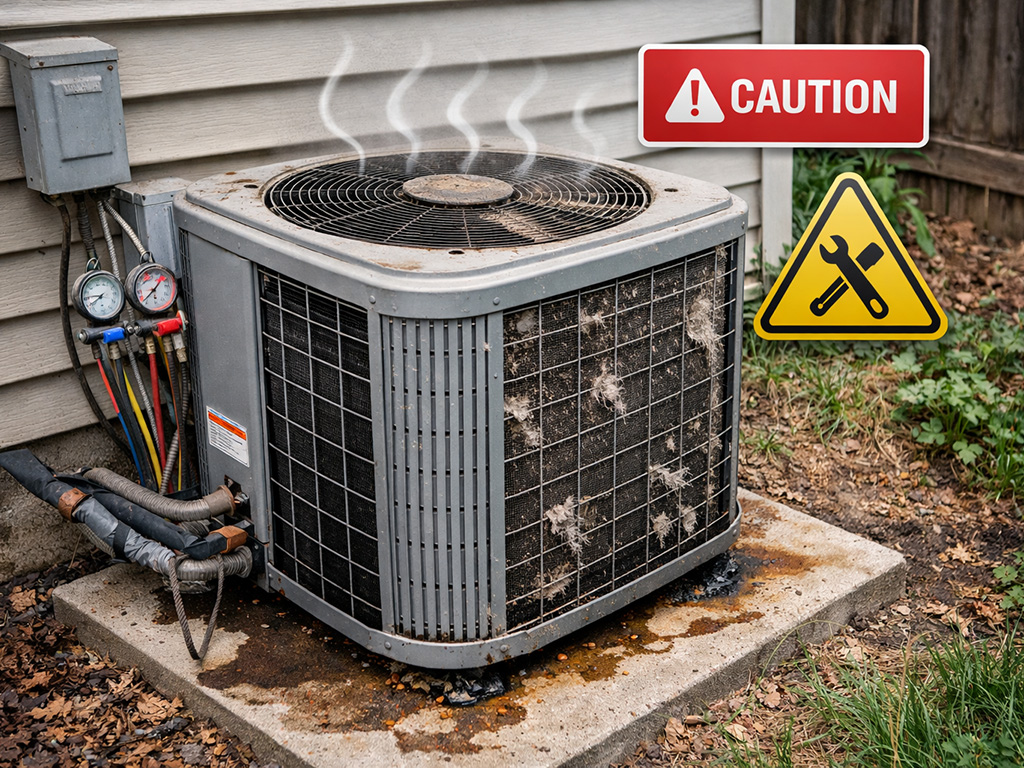
If your home is taking longer to reach your set temperature than it used to, but the system is still getting there eventually, this is often a maintenance issue rather than an outright failure. Dirty coils, low refrigerant, and reduced airflow all make the system work harder to achieve the same result. Regular maintenance of coil fins ensures your air conditioner operates at peak performance, helping to avoid longer cooling times and maintain energy efficiency.
Musty or Stale Odors from Vents
A musty smell when the AC runs is often caused by mold or mildew growth inside the air handler, evaporator coil, or ductwork. This is a maintenance and air quality issue. Following top air conditioner maintenance tips, such as using UV air purifiers and cleaning the coil during an annual tune-up, can address this effectively.
A burning smell, on the other hand, warrants immediate attention — it can indicate an electrical issue or a failing motor.
It’s Been More Than 12 Months Since Your Last Service
If you can’t remember when a technician last looked at your system, schedule a maintenance visit. Full stop. In Colorado, the recommended practice is to service your AC in the spring — before you actually need it — so any issues are discovered and resolved before summer heat sets in.
What’s Included in an Annual AC Tune-Up?
A professional annual AC tune-up, performed by a trained HVAC technician, typically includes steps that also help prevent issues like an overheating AC during Denver summers and generally covers:
- Inspecting and cleaning the evaporator and condenser coils
- Checking refrigerant levels and testing for leaks
- Inspecting electrical connections and tightening loose terminals
- Testing the capacitor and contactor
- Lubricating moving parts in the motor and fan
- Checking the condensate drain and clearing clogs
- Inspecting the blower motor and belt
- Calibrating and testing the thermostat
- Checking airflow and static pressure
- Inspecting ductwork for obvious leaks or disconnections
A thorough tune-up takes about 1.5 to 2 hours. In Denver, most HVAC companies offer spring tune-up specials, and many offer maintenance plan agreements that include annual service, priority scheduling, and discounts on repairs.
Keeping up with regular air conditioning maintenance and properly winterizing your AC system in Denver helps you avoid expensive repairs while keeping your energy costs in check.
Understanding AC Refrigerant: What You Need to Know
Refrigerant is the substance that makes cooling possible — it cycles between your indoor and outdoor units, absorbing heat from your home’s air and releasing it outside. Without the correct refrigerant charge, your HVAC system cannot cool effectively.
Your AC should never “use up” refrigerant. It operates in a closed loop, so if levels are low, it indicates a leak somewhere in the system. Adding refrigerant without finding and fixing the leak is a temporary fix that will only delay the problem.
The two most common refrigerants in residential AC units are:
R-22 (Freon) — used in systems manufactured before 2010. R-22 was phased out under Environmental Protection Agency (EPA) regulations and is no longer produced in the U.S. The EPA’s regulations are designed to protect the environment by reducing the use of ozone-depleting substances. If your older AC unit uses R-22 and has a refrigerant leak, repair costs can be high — and it may be more economical to replace the entire HVAC system. Additionally, if your AC unit has a low SEER rating, upgrading to a newer, more efficient model could be beneficial.
R-410A (Puron) — the current standard refrigerant in systems manufactured after 2010. More environmentally friendly and more widely available than R-22.
R-32 and R-454B — newer refrigerants being introduced in systems manufactured after 2025 as the industry transitions to lower global warming potential (GWP) options.
Only EPA-certified technicians are legally permitted to handle refrigerants. If a technician suggests simply “topping off” your refrigerant without checking for a leak, that’s a red flag.
How Long Does a Central Air Conditioner Last?
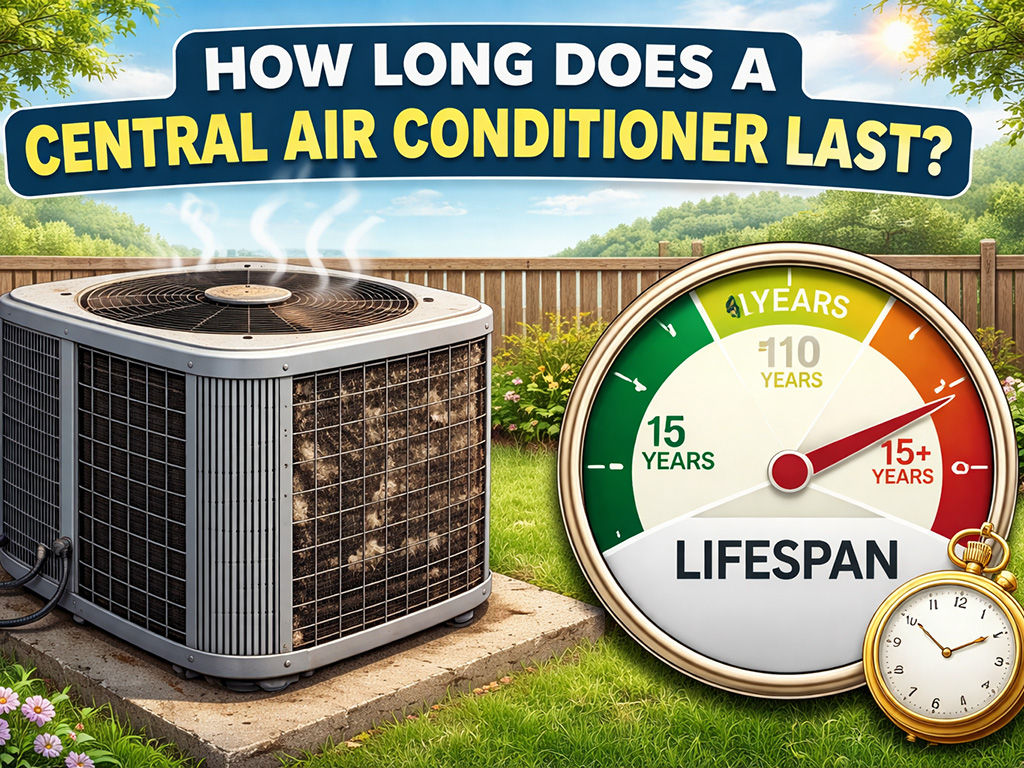
Most air conditioning systems last around 10 to 15 years with regular maintenance. The average lifespan of a central air conditioner is 15 to 20 years, though this varies considerably based on:
- How well the system has been maintained
- The climate it operates in (Colorado’s UV exposure and temperature swings are harder on equipment than milder climates)
- The quality of the original installation
- How hard the system has to work relative to the size of the home
If your AC unit is less than 10 years old, repairing it is often the most cost-effective option. However, in the long run, investing in a new air conditioner or new unit may be more cost-effective than frequent repairs, especially if your system is older or experiencing ongoing issues. When considering whether to repair or replace, think about the potential savings and benefits of a new unit, and whether a purchase now could help you avoid higher costs down the road.
Systems that receive annual maintenance consistently trend toward the higher end of that range. Systems that are neglected often fail in the 10 to 12 year range — and frequently at the worst possible time.
Repair vs. Replace: The 5,000 Rule
A commonly used guideline in the HVAC industry is the 5,000 rule: multiply the age of the system by the estimated AC repair costs. If the result exceeds $5,000, replacement is generally the more economical long-term decision. Keep in mind that if your HVAC warranty has expired, you are responsible for the full amount of repair costs, which can significantly impact your decision.
For example, if your 14-year-old AC unit needs a $400 repair, 14 × 400 = $5,600 — tipping slightly toward replacement territory, especially when you factor in the declining efficiency of an aging system, the likelihood of frequent repairs, and the potential for higher costs if maintenance has been skipped. Skipping maintenance may save money in the short term, but it often leads to higher repair costs later.
Other factors that favor replacement over repair:
- The system uses R-22 refrigerant and has a refrigerant leak
- The compressor has failed (compressor replacement often costs 50–70% of a new system)
- Your energy bills have been rising steadily despite maintenance
- The system is no longer keeping up with your home’s cooling demands
- You’re planning to sell your home, and a new system would add value
- You are experiencing frequent repairs, which can add up to more money spent over time
When considering replacement, it’s important to evaluate your entire HVAC system. Replacing both the furnace and the AC unit together can improve efficiency and ensure compatibility, potentially saving you more money in the long run.
Denver-Specific AC Considerations
Colorado’s climate creates some unique conditions that affect how central air conditioning systems perform and age. Proper maintenance, system care, and smart planning when adding a central air conditioning system in Denver are essential for keeping your home comfortable in Denver’s unique climate, where weather extremes can quickly impact indoor comfort.
High altitude — Denver sits at 5,280 feet above sea level, and many surrounding communities are higher. Altitude affects air density, which can impact system efficiency and airflow calculations. Systems installed without proper altitude adjustments may underperform.
UV exposure — Colorado receives more annual sunshine than Miami or Honolulu. Prolonged UV exposure degrades rubber components, refrigerant lines, and electrical insulation faster than in cloudier climates.
Hailstorms — the Front Range is one of the most hail-prone regions in the country. A severe hailstorm can damage condenser fins, refrigerant lines, and fan blades on outdoor units. After any significant storm, a visual inspection of your outdoor unit is worthwhile.
Dust and wildfire smoke — Colorado’s dry conditions and increasingly frequent wildfire events mean air filters clog faster than manufacturers’ schedules assume. During fire season, check filters monthly.
Rapid temperature swings — Denver is famous for dramatic temperature changes within a single day. These thermal cycles stress components and can accelerate wear on capacitors, contactors, and refrigerant connections.
How to Find a Reputable HVAC Technician in Denver
When it’s time to schedule service, and you’re finding the best HVAC services in Denver, look for the following:
- NATE certification (North American Technician Excellence) — the gold standard for HVAC technicians
- Colorado state contractor license — required for HVAC work in Colorado
- EPA 608 certification — required to handle refrigerants
- Established local reputation — look for Google reviews, BBB rating, and years in business
- Written estimates — any reputable company will provide a written quote before beginning work
- Warranty on parts and labor — standard for quality companies
Be cautious of any company offering unusually low prices for refrigerant service, or any technician who recommends replacing major components without a clear diagnostic explanation, and follow best practices for hiring an HVAC professional in Denver.
Schedule Your AC Service Appointment Today
Whether your system is showing clear warning signs or you simply can’t remember the last time it was serviced, the right move is the same: schedule a professional inspection before the problem gets worse — or before summer arrives and every HVAC company in Denver is booked out for weeks.
A properly maintained central air conditioner runs more efficiently, lasts longer, and is far less likely to leave you without cooling on the hottest day of the year. Annual maintenance is one of the best investments a homeowner can make in the comfort and value of their home.
Don’t wait for a breakdown. Schedule your AC service appointment today and head into summer with confidence.